AI captions are the quiet win for deaf children in class
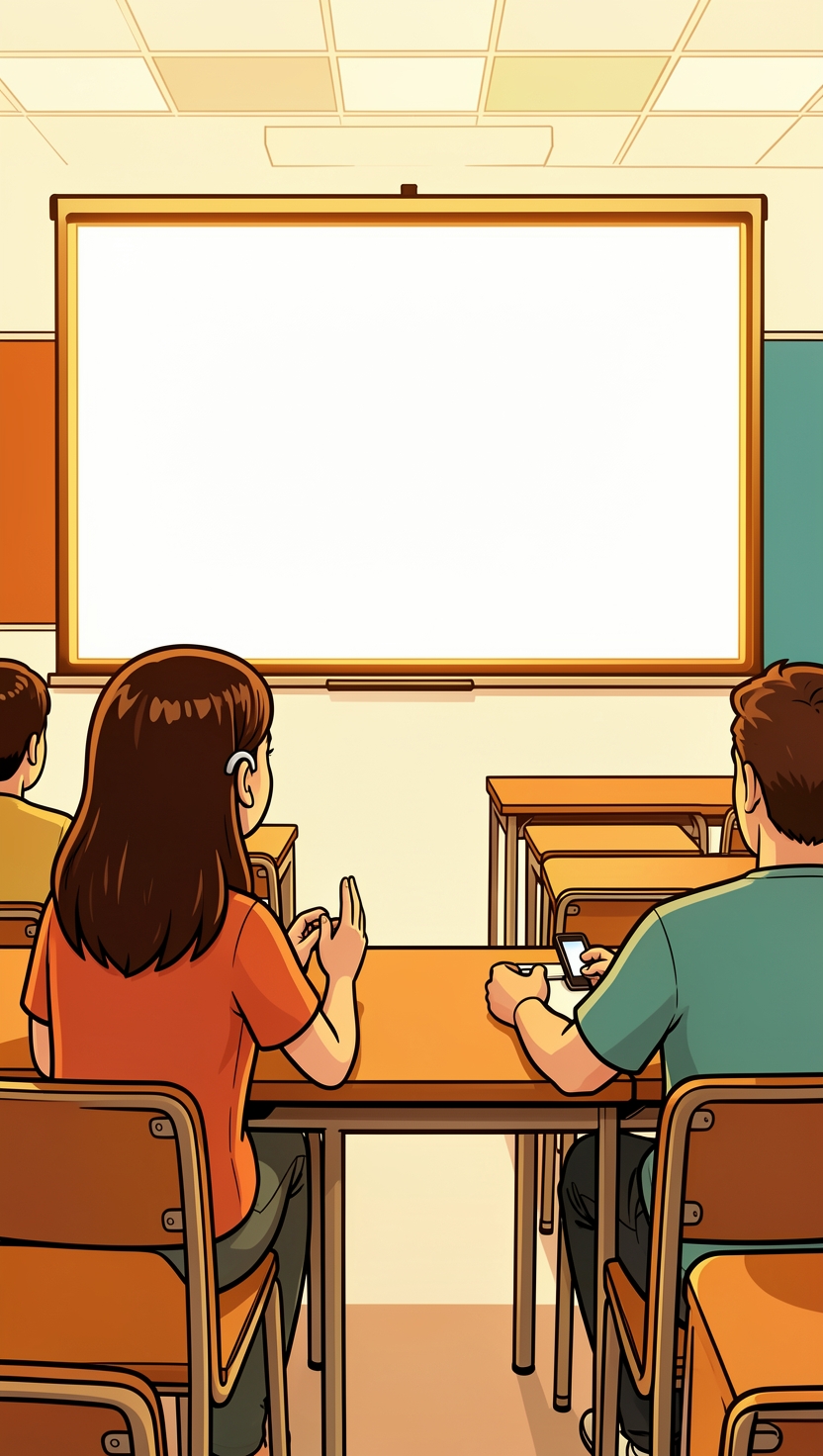
At the front of a Primary 4 science lesson, a teacher is explaining how water gets up into clouds. On the screen beside her, her words are appearing as text, about a second behind her voice. A girl in the third row is reading them. She wears a hearing aid in each ear, and today she is following the lesson without asking anyone to repeat anything, which on most days is the whole battle.
None of that is a prototype. Live transcription already sits inside the software schools use, and it is easily the least glamorous thing AI does for children. It may also be one of the few things it does genuinely well.
Most deaf children here are in ordinary classrooms
When MOE was asked in Parliament about deaf and hard-of-hearing students in April 2021, the numbers were smaller and steadier than most people assume: roughly 500 to 700 at primary level, 500 to 650 at secondary, and 250 to 450 in post-secondary institutions, or about 0.2 to 0.4 per cent of each cohort. Most, MOE said, have mild needs, use hearing aids or implants, and learn in mainstream schools. Signing support is concentrated in a few places. Mayflower Primary and Beatty Secondary run the HL-Signing programme, and MOE Kindergarten@Mayflower has offered it since the 2022 K1 cohort, with a specialised teacher working alongside the subject teacher in Singapore Sign Language.
So the typical Singaporean child with hearing loss is not sitting in a specialist setting with an interpreter. She is in a class of thirty, relying on a hearing aid, a decent seat, and a teacher who remembers to face the room. Text on a screen changes that arithmetic more than any chatbot ever will.
The group is not small anywhere. A WHO fact sheet updated in March 2026 counts around 95.1 million children aged 5 to 19 living with hearing loss, and lists limited access to education among the results when it goes unaddressed.

The teacher’s voice is the easy part
Speech recognition got good on a very particular kind of audio: one adult voice, close to a microphone, speaking in reasonably complete sentences. That describes a teacher at the front of a room almost exactly, which is why captions of the lesson tend to be usable straight away.
Children’s voices are a harder problem, and the research says so plainly. A 2023 paper (revised in 2024) on adapting OpenAI’s Whisper model to children’s speech notes that progress in the field “doesn’t readily extend to ASR for children”, because there is little child speech data to train on and children simply sound different. After retraining on a corpus of children talking through science lessons, the authors cut the word error rate from 13.93 per cent to 9.11 per cent. That is a real gain. It is also still about one word in eleven, on clean recordings, with one child speaking at a time.
The classmates are the hard part
Now move the microphone into the middle of a group. In 2022, a team of researchers recorded 30 middle-school students doing small-group work in real classrooms and pushed the audio through three commercial speech recognition services. Word error rates landed between 84 and 95 per cent. Most of the damage was deletion: around 67 per cent of the errors were words the system dropped rather than words it mangled.
That failure mode is the sneaky one. A transcript full of wrong words looks broken, so you distrust it. A transcript full of missing words reads perfectly fluently and loses half of what was said. A child reading it has no way to tell which kind she is holding.
The researchers were measured about what this is good for: classroom speech recognition suits applications that “require higher precision but are tolerant of lower recall”. Reading a transcript to work out what your friends just decided is the exact opposite of that.
The evidence is thinner than the technology
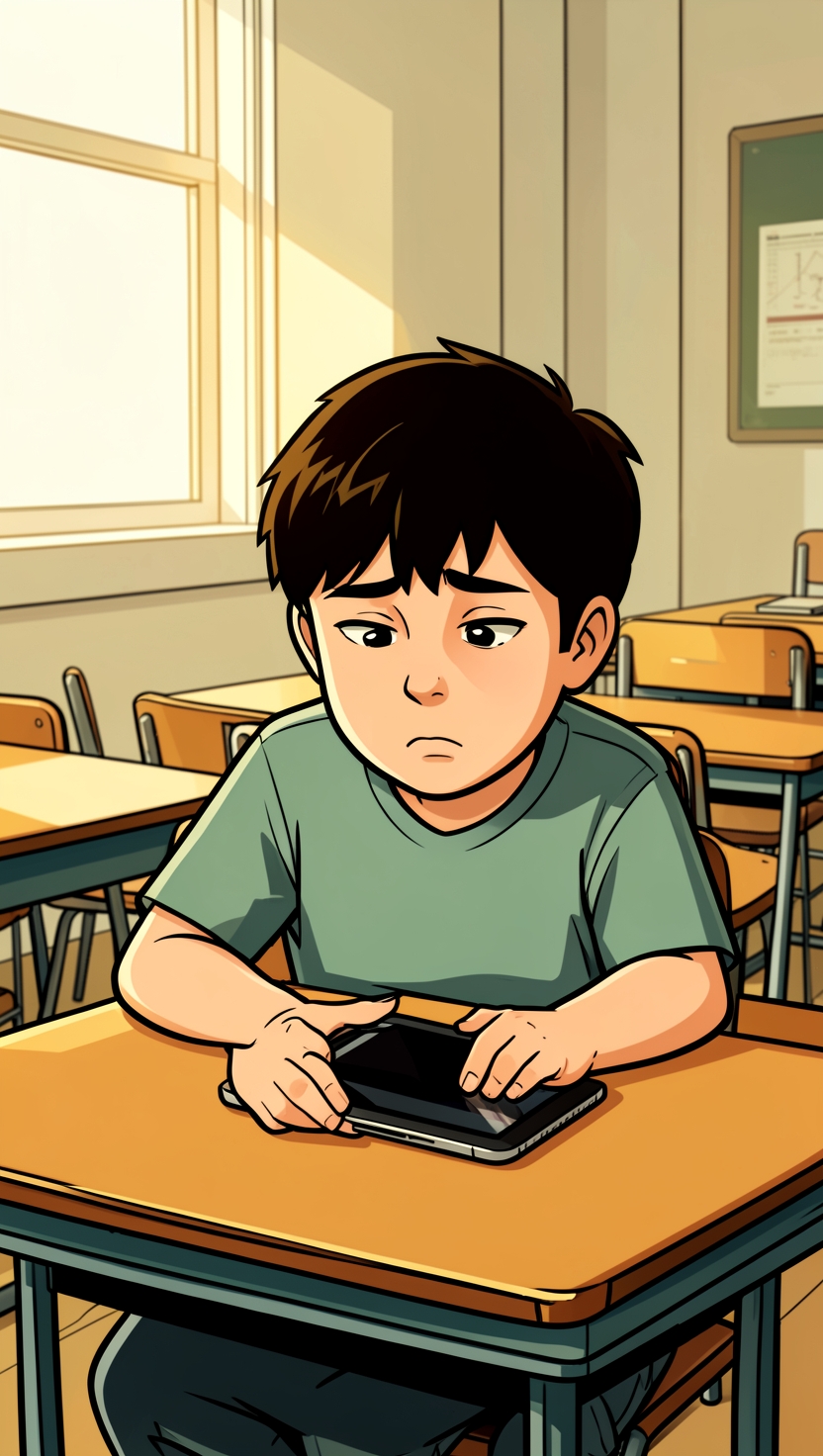
Worth saying out loud: the research on visual access for deaf students has not kept up with the tools. A review published in Audiology Research in January 2026 by Francesco Pavani and Valerio Leonetti went looking for studies comparing captions, sign language, and both together. It found four that qualified, spread across 2004 to 2022, and concluded that the evidence is “too scarce and inconclusive to be used for practical implementation in educational settings”. The one pattern it could see was that captions appear to add something of their own even when an interpreter is present. The authors call that a hint rather than a finding, and so should we.
As with AI reading tools, the gain here belongs to the child who needs it. It is an accommodation, not a general upgrade for the class.
What is actually worth asking for
The useful requests are dull ones. A lapel microphone on the teacher. Lesson recordings kept together with their transcripts, so a child can reread instead of reconstruct. Captions switched on for any video shown in class. Most of this needs no purchase order at all: MOE told Parliament in October 2024 that the Student Learning Space already carries “video and audio transcriptions and text-to-speech feature”, and that it funds assistive technology devices for students with special educational needs in both mainstream and SPED schools. Outside school, the Assistive Technology Fund covers up to 90 per cent of a device’s cost with a lifetime cap of $40,000, and since January 2026 the income ceiling has sat at $4,800 per capita per month rather than $2,600, which brings a lot more families inside it.
The second request is not technology at all. If the transcript dies during group work, group work is where a deaf child needs a human rule instead: one person speaks at a time, decisions get written on paper, the teacher circles back to check. Schools do this well once somebody explains why it matters.
That is the part worth pressing on. A child who can follow her teacher but not her friends will keep up with the syllabus and still miss the classroom. Captions have quietly handled the first half of that problem. The second half is still ours.
Was this useful?
Sources
- Deaf and hard-of-hearing students (Parliamentary Reply, 5 April 2021) · Ministry of Education, Singapore
- Enhancing Support for Special Needs Education and Potential Use of Assistive Technologies (Parliamentary Reply, 14 October 2024) · Ministry of Education, Singapore
- On the Coexistence of Captions and Sign Language as Accessibility Solutions in Educational Settings · Audiology Research
- Challenges and Feasibility of Automatic Speech Recognition for Modeling Student Collaborative Discourse in Classrooms · International Conference on Educational Data Mining
- Kid-Whisper: Towards Bridging the Performance Gap in Automatic Speech Recognition for Children VS. Adults · arXiv
- Deafness and hearing loss (fact sheet, 3 March 2026) · World Health Organization
- Assistive Technology Fund · Enabling Guide, SG Enable