#parenting
70 articles
- China's AI homework apps don't just give the answer
China's biggest AI homework apps catch the mistake, explain it, then test the skill again. Here's how to copy that loop tonight.
- How to build an AI that can tell rock from paper from scissors
A free tool lets your child train a real machine learning model with a webcam, then wire it into a rock-paper-scissors game they built themselves.
- Instagram guesses your child's age now. What if it's wrong?
Instagram now estimates your child's age from photos and posts instead of asking. What happens when the guess is wrong, and what Singapore plans.
- Merlin Bird ID gives your child an ear for birdsong
Merlin names birds from their song in seconds, and radar counts a billion more overhead at night. Two ways AI makes a child's world louder and bigger.
- Teachable Machine lets your child train an AI, then fool it
A Google tool lets a child train a working AI model in ten minutes with a webcam. The real fun starts when they work out how to fool the thing they built.
- NASA's volunteers found 3,000 brown dwarfs. Kids can help too
NASA volunteers doubled the known count of brown dwarfs by spotting dots that moved. Here is the citizen science your child can join tonight.
- OpenAI's $5m teen AI research fund, and what it quietly admits
OpenAI is funding independent research on how AI affects teens aged 13 to 17. The fine print tells Singapore parents how much is still unknown.
- Japan's school AI rules are about timing. Borrow them for homework
Japan's education ministry lists the moments children should not use AI for schoolwork. Its homework rules translate neatly to a Singapore home.
- AI can now describe a science diagram to a blind child
AI image description gives a blind child independent access to diagrams. A 2026 diary study shows how often it still gets things wrong.
- NYC's school AI ban reaches Grade 8. Singapore starts at P4
New York paused student AI through eighth grade, and China and Singapore drew their own lines. What the NYC schools AI ban means for families here.
- AI voice cloning scams: when the call sounds like your child
AI voice cloning scams can make a stranger sound like your child. Why a familiar voice no longer proves anything, and the family check that still works.
- The chess bot that plays like a kid, not a supercomputer
India's chess boom put an engine in every child's pocket. The research says the bot that helps a child most is the one that plays at their level.
- YouTube's AI age check now runs on Singapore accounts
Google's age estimation model guesses whether your child is under 18 from what they watch on YouTube. What that changes for a Singapore family.
- China's kid mode covers the whole phone. Ours stops at the app.
China builds one kid mode across the phone, the app store and the app. Singapore parents get per app parental controls, and AI slips between them.
- What AI can do while your child waits for early intervention
Singapore's EIPIC wait is down to 5.5 months. Here is what AI can honestly do for a child sitting in that queue, and what it cannot.
- Australia banned under-16s from social media. Did it work?
Australia's under-16 social media ban is nine months old and the first evaluation is in. Here is what the results mean for families across Asia.
- Minecraft added an age check. It is aimed at the adults
Minecraft's age check asks grown ups to prove they are 18, not children to prove they are not. What that means for a Singapore family.
- Kids given AI still reached for the crayons
Researchers in Scotland gave 40 children generative AI for three days. Given a free choice for creative work, they preferred the craft table.
- Google Search now draws the diagram, and nobody checked it
Google's new study tools generate science diagrams and quizzes inside Search, free and global in English. Here is what that changes for a child here.
- YouTube Kids AI videos: how to spot them and what to change
AI-made cartoons are being recommended to young children on YouTube. Why the labels miss them, how to spot them, and which settings actually help.
- PSLE maths and the AI that reads your child's working
In PSLE maths a wrong answer with the right method still earns a mark, which is why the AI worth having reads your child's working instead of writing it.
- Fortnite's age rating stops where the AI starts talking
Epic switched on AI characters that talk back inside Fortnite islands. What a game's age rating still tells you, and what it now cannot.
- Snapchat's age limit is 13. Who actually checks?
Snapchat's age limit is 13, but the checking has moved to Apple, the app store and a machine's guess. What that leaves for a Singapore parent.
- Roblox Build lets kids make a game by typing one line
Roblox Build turns a typed sentence into a playable game, and kids in New Zealand got it first. Here is what it actually changes for a child.
- ChatGPT for Teens is live. What it does, and who it misses
OpenAI's new teen version of ChatGPT tries to catch homework shortcuts. Here is what it changes for Singapore families, and who it quietly leaves out.
- Is Instagram safe for a 12 year old? What that 13 really means
Every app sets 13 as its minimum age, but that number comes from a 1998 privacy law, not a safety test. Here is what to ask before you say yes.
- AI captions are the quiet win for deaf children in class
AI captions can give a deaf child every word the teacher says in a mainstream Singapore classroom. Where they still fail is the group work.
- India will check your child's age with an ID, not a face scan
India will soon require a parent's verified consent for every under 18 online, and it is choosing a government ID token over an AI face scan.
- WhatsApp parental controls are here. Meta AI is the gap
WhatsApp's new parent-managed accounts switch Meta AI off for under 13s. Once a child moves to an ordinary account, that AI supervision vanishes.
- Beijing's robot games, and the joy of watching them fall
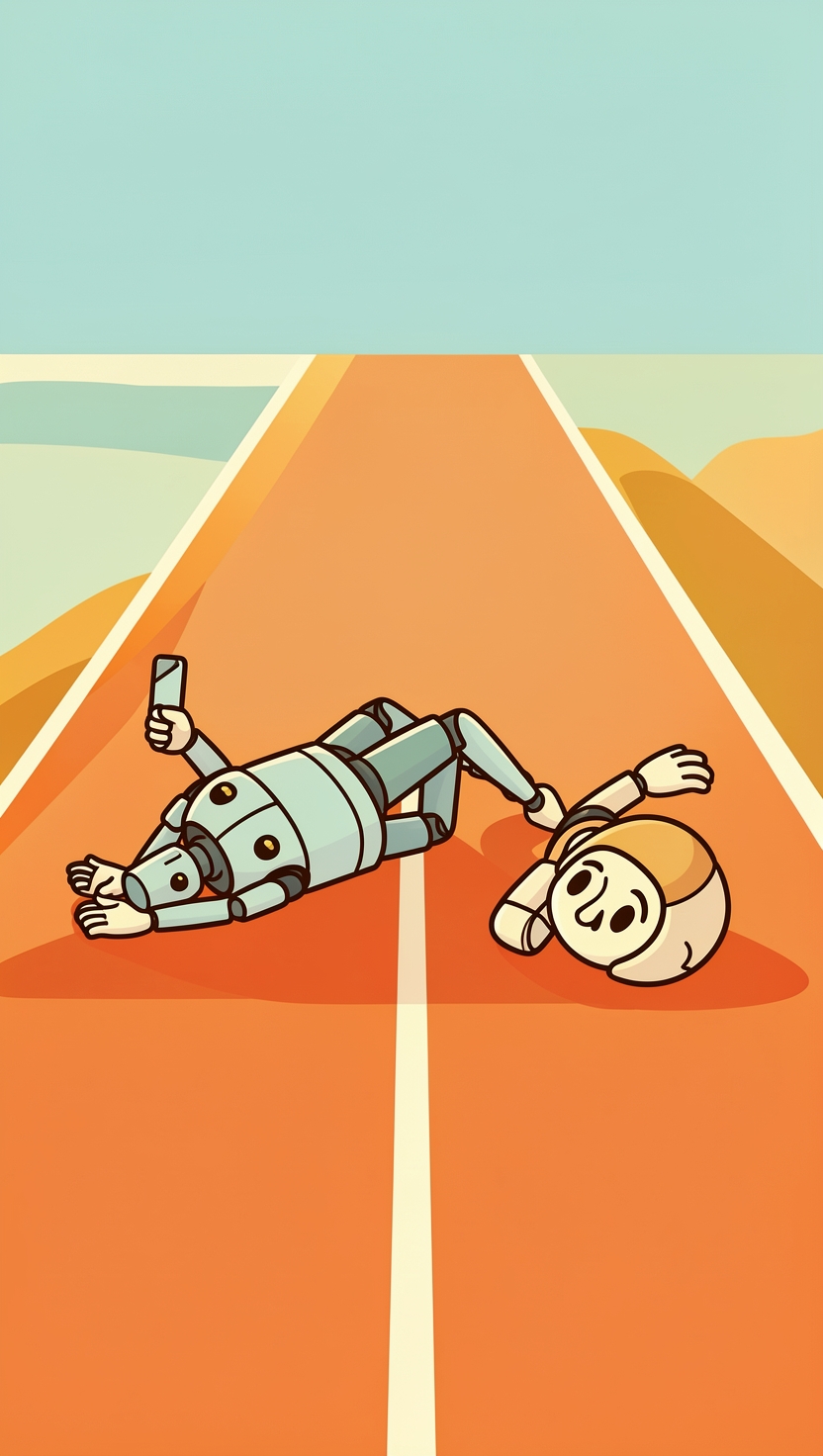
Beijing's second World Humanoid Robot Games opens next week. The falling over is the best part, and the most useful thing a child can watch.
- OpenAI wants to help teach your child's mother tongue
Singapore's S$300 million OpenAI deal names mother tongue learning as an early use case. The models are not equally good in all three.
- ChatGPT makes Ghibli-style art in seconds. Teach this first
Your child wants a Ghibli-style AI picture. Japan spent a year arguing about that exact request, and it hands parents a clearer thing to teach.
- AI marks the spelling so your child's teacher can mark ideas
Singapore's school AI gives instant feedback on spelling and grammar. The research says the real gain shows up in the next piece your child writes.
- TikTok age bans are coming to Europe. Will they work?
France bars under 15s from social media and TikTok is guessing ages with AI. A year of UK data shows what a TikTok age ban really changes.
- Discord's age check, and the ID your teen uploads
Discord is rolling out age checks worldwide. The risky part is not the face scan, it is the appeal form where a teen uploads a real ID.
- India's kids are making things with AI, not just asking it
A global youth AI challenge, free creative tools in 15,000 schools, folklore films. In India the fun part of AI for kids is building something.
- Gemini is on by default in Google Classroom for under-18s
From 10 August 2026, Google turns Gemini on by default for under-18 students in Classroom. In Singapore, a school admin holds that switch.
- Studying with AI works better when it asks the questions
American students mostly ask AI to explain things. Decades of learning science say studying with AI works better when the machine does the asking.
- Can a free AI tutor close Singapore's tuition gap?
Singapore families spent $1.8 billion on tuition in 2023. Here is what the evidence says a free AI tutor can and cannot do about that gap.
- Children are taking their worries to the homework chatbot
New surveys in Australia and Japan show children bring personal worries, not just homework, to everyday AI assistants. What that means for parents here.
- Roblox checks your child's face now. What it can't see
Roblox now uses a face scan to sort players by age before they can chat. What the check does, where it slips, and what it leaves to parents.
- AI is learning animal languages, and your child can join in
Zebra finch calls, dolphin whistles, birdsong in the park: how AI is decoding animal communication, and what your child can hear this weekend.
- How old should a child be to use AI? The labs disagree
Anthropic says 18, OpenAI says 13, Google lets an under-13 in with a parent's tap. What those AI age limits really tell a Singapore parent.
- Why AI gets weaker when your child asks in Hindi or Tamil
Benchmarks show chatbots score lower in Indian languages than in English. Four home habits that help a child use AI in their own language well.
- The AI that can see your child's myopia coming
Singapore researchers built an AI that predicts which children develop high myopia. The prediction is the easy part, and what follows matters more.
- China teaches every child AI, and bans AI friends for them
China now teaches AI in every school and bans AI companions for under-18s. The tool versus friend line is a useful one for parents in Singapore.
- Where to report an AI fake of your child in Singapore
Singapore's Online Safety Commission opened in June 2026. What it can take down when an AI-made image of your child spreads, and what it cannot.
- Asia's AI contests for kids ask to see the first prompt
Japan, Korea and Singapore are handing children AI as a making tool, and the smartest contests ask to see the first prompt, not the finished picture.
- The AI labs want your child's teacher, not your child
Anthropic and Google are now shipping AI built for teachers rather than kids. Here is what that changes for a Singapore parent, and what MOE does instead.
- What counts as cheating when your child uses AI for homework
Britain's exam regulator has written down what honest AI use in coursework looks like. The rule behind it makes a workable homework habit at home.
- Who AI reading tools actually help, and who they slow down
AI reading tools like text-to-speech lift some children and slow others down. What the evidence says, and what Singapore schools already offer.
- India's AI curriculum starts at Class 3, with puzzles not chatbots
From 2026-27, India teaches AI from Class 3, and the plan leans on maths puzzles rather than chatbots. Here is what a Singapore parent can take from it.
- Singapore's app store age checks, and the AI they miss
Singapore's app stores now check ages before under-18s download adult apps. Here is what that gate catches, what it does not, and what parents can do.
- What kids built with AI this summer: drones, art and a $120 sensor
American students spent a festival weekend at MIT showing what kids built with AI: rescue drones, art and water sensors. What parents can borrow from it.
- What ChatGPT's new parental controls do, and what they don't
OpenAI has expanded ChatGPT's parental controls with new safety alerts and a Study Mode default. What Singapore parents can set, and what stays private.
- How to teach your child to fact-check an AI
South Korea just demoted its AI school textbooks over errors. The lasting skill to teach kids at home is how to check what an AI tells them.
- Why Singapore's school AI listens to kids instead of answering
Most Singapore primary pupils speak English at home. The most useful school AI here does not answer questions for them, it listens to them speak.
- Training AI on children's data now needs its own consent
A US rule that took full effect in April 2026 means firms must ask separately before training AI on children's data. What it changes for parents.
- Why young children believe AI before they can question it
The loudest worry about kids and AI is teenagers and homework, but the youngest children trust the machine most and question it least.
- What kids are actually doing with AI chatbots
Not homework shortcuts, mostly. A look at how children are really using AI chatbots at home and school, and what parents can do about it.
- Are AI toys safe? The trouble with talking teddy bears
An AI teddy bear drifted into explicit talk, and another toy exposed 50,000 children's chats. What parents should know about AI toys before buying one.
- When an AI companion is hard to quit, teens notice first
Most teens use AI companions for fun and creativity, not romance. The ones who get stuck are often the first to say so, if we listen.
- Kids are adopting AI faster than adults, and they're wary of it
A UNICEF study of 20 million children across 10 countries finds kids adopting AI far faster than adults, and surprisingly clear-eyed about its risks.
- AI deepfake nudes in schools are a peer problem, not stranger danger
AI nudify apps have made deepfake abuse a classmate problem in schools, and most parent safety talks aim at the wrong threat. What actually helps.
- Kids can't switch off Google's AI answers, and that's the risk
A July 2026 safety review found Google's AI search answers pose an unacceptable risk to kids, and parents can't turn them off. What to actually do.
- Schools are teaching kids AI faster than they're making rules
Nearly every student already uses AI, but most schools still have no formal rules for it. Here is what parents should actually ask their child's school.
- When teens ask a chatbot for mental health advice
A fifth of young people now ask AI chatbots for mental health advice, and most tell no one. The worry is less the advice than the secrecy.
- Cognitive debt: what AI could be doing to kids' thinking
The loudest worry about kids and AI is cheating. The quieter, better-evidenced one is cognitive debt: what a young brain loses skipping the hard part.
- Parents underestimate how much their kids use AI
New 2026 research finds parents guess their children use generative AI far less than kids say they do. Why the gap matters, and how to close it.
- AI chatbot bans for kids: what the 2026 laws actually do
In 2026 a wave of state and federal laws set out to restrict AI companion chatbots for minors. Here is what they cover, and what they leave to parents.