AI is learning animal languages, and your child can join in

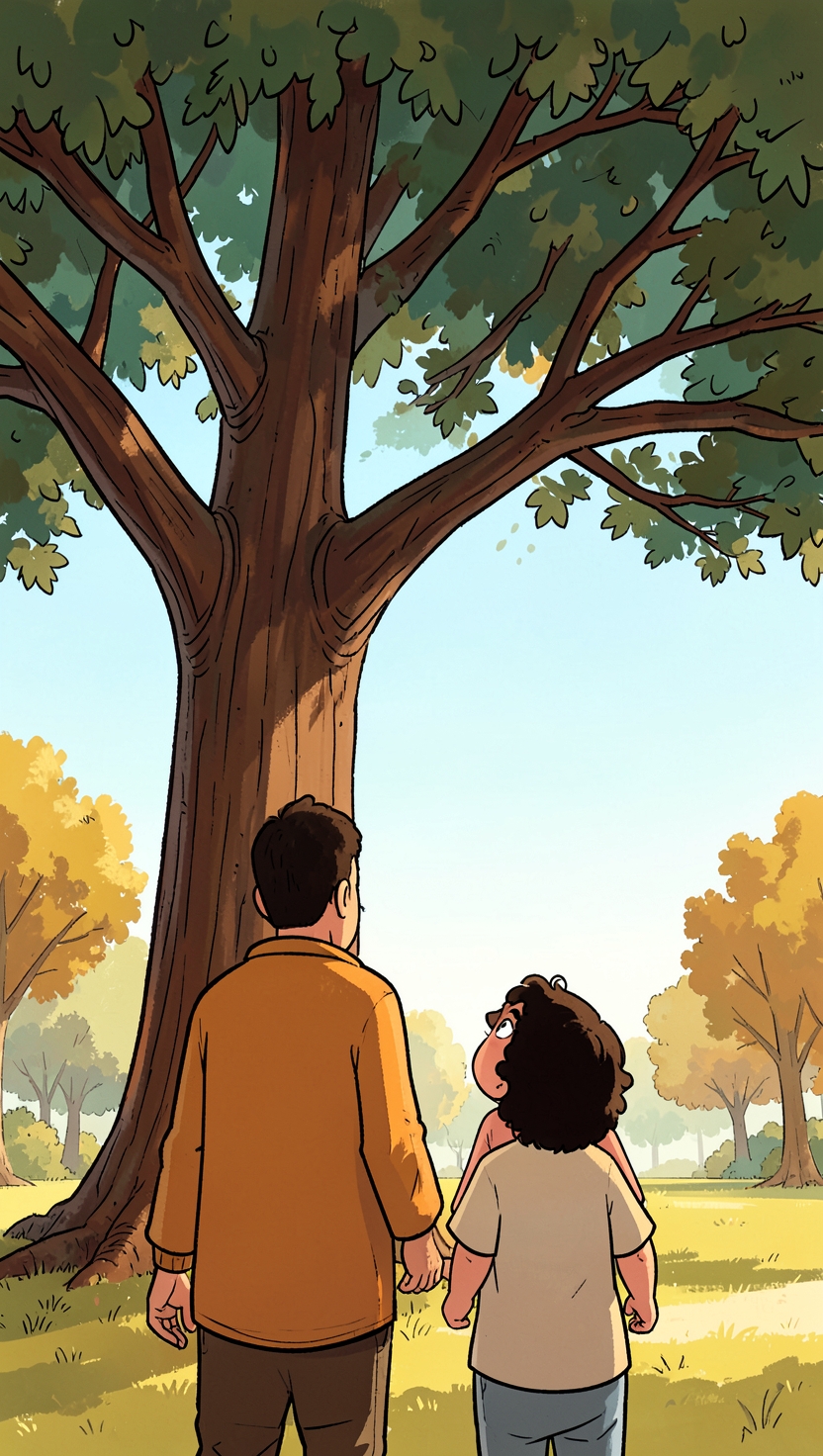
Your child points at a tree and asks what the bird is actually saying. The standard parental move is a vague guess and a change of subject. There is a better answer this year: several teams of quite serious scientists are on that exact question, using AI, and one of them just won a hundred thousand US dollars for asking the birds to mark her own homework.
Somebody finally asked the birds
The 2026 Coller Dolittle Prize, announced in June by the Jeremy Coller Foundation and administered by Tel Aviv University, went to Dr Julie Elie of the Theunissen Lab at UC Berkeley. Only its second year, and its criteria already say what the field values: non-invasive work that produces measurable responses from the animals themselves.
Elie’s team combined over a decade of behavioural observation with machine learning to sort zebra finch calls into eleven categories by meaning rather than by sound, with meanings including aggression, hunger and bonding. Then the good part: they tested the birds. When the finches got a classification wrong, they confused calls that meant similar things rather than calls that merely sounded alike, which is what you would expect if the birds were listening for meaning.
Elie’s own line is worth reading out at dinner. “Our research shows that exciting scientific discoveries come from mistakes… The fact that the birds get the classification of their own calls wrong has enabled us to gain huge insight into their perceptions.”
There is a bounty on the table too. The foundation’s grand prize, US$10 million in equity investment or US$500,000 in cash, is still on offer for work that gets animals communicating independently, without recognising that a human is involved.
The dolphins get a phone
Google’s version is noisier. DolphinGemma, announced on 14 April 2025 with Georgia Tech and the Wild Dolphin Project, runs to about 400 million parameters, small enough to sit on a Pixel phone carried into the water. It learned from the project’s recordings of wild Atlantic spotted dolphins in the Bahamas, going back to 1985. What it does is oddly familiar: it turns dolphin sound into tokens and predicts what is likely to come next, the trick your phone keyboard plays on your sentences. Alongside it runs CHAT, an underwater system that invents synthetic whistles for specific objects and teaches them as a shared vocabulary. That is not translation. It is a pidgin, negotiated between two species, one whistle at a time.
Nobody has translated an animal yet, and the people doing the work say so. Project CETI analysed nearly 9,000 sperm whale codas from the Eastern Caribbean and proposed a “phonetic alphabet” in Nature Communications in May 2024, built on four features it named rhythm, tempo, rubato and ornamentation, while noting that the function of many codas remains unknown. DolphinGemma is still listed by Google DeepMind as in development.
What the machine hears is a picture
Here is the part children find surprising, and the most useful idea here. The AI is not really listening. It is looking.
BirdNET, built by the Cornell Lab of Ornithology with Chemnitz University of Technology, captures audio at 48 kHz, chops it into three second segments, converts each segment into a spectrogram (a picture of sound, frequency up the side, time across) and runs an image recognition network over that picture. It covers over 6,000 species. Merlin’s Sound ID, from the same lab, does it live on a phone, free, for more than 2,000 species, and works offline if you load your location first.
Show a child the spectrogram scrolling past while a bird sings and something lands. The machine turned a sound into a drawing, then recognised the drawing. That is a fair description of an enormous amount of AI.
Point it at a Singapore tree and it goes quiet
Now the honest part. Merlin’s own help pages say Sound ID covers “most birds of the US, Canada, and Europe, and also includes common, widespread birds of India and Central and South America”. Southeast Asia is not on that list. Hold the phone up to the koel that wakes your street at six in the morning and the app has little to offer.
That gap is not a fault in the phone but in who has recorded what, and someone here is closing it. Dr Sean Yap, a research fellow at the NUS Centre for Nature-based Climate Solutions, works in the university’s LAPIS lab, where the team leaves small autonomous recorders out in tropical forest and uses AI to sort what comes back. “These recordings can help us compare species communities between sites, track animal activity patterns, and even locate individual animals,” he told an NUS news piece in May 2026. He is equally clear about the limits: the models handle songbirds with distinctive voices well, struggle with lower frequency calls, and are less reliable here because they were trained largely on North American and European species. His team is building locally trained versions.
So a child in a Singapore car park at dawn, with a free app that does not know what a koel is, is not at the back of this field. They are at its edge.
What to do with a Saturday morning
Take a phone to a park and run the loop that turns an app into an education.
- Guess first, check second. The rule that separates learning from looking up, and the same habit we wrote about in teaching children to fact-check an AI.
- Look at the spectrogram, not just the name. Ask which shape belongs to which bird. Children get good at reading those squiggles faster than adults do.
- Keep a list, because lists count. NParks published a study in May 2023 drawn from Garden Bird Watch records: over 1,100 citizen scientists, close to 70,000 sightings, 184 species, across 64 sites between 2015 and 2019. It found more bird diversity in green spaces with semi-natural vegetation and water bodies, and those insights now feed into how Singapore plans future green spaces. A child’s notebook of what sang where is the same kind of data.
- Enjoy the wrong answers. The finches misclassified their own calls, and that was the most informative part of the study.
The AI everyone argues about is a chat window with a cursor blinking in it, waiting to be asked something. The one worth showing a child this weekend is a microphone left in a forest with nobody typing at all, waiting to hear what was already being said.
Disclosure: Mentus AI makes an AI mentoring app for children, so we have a commercial interest in families being comfortable with AI. None of the tools named are ours.
Was this useful?
Sources
- Scientists win US$100,000 in 2026 Coller Dolittle prize for latest step forward in interspecies communication research · Jeremy Coller Foundation
- Julie Elie wins 2026 Coller Dolittle Prize for progress towards two-way interspecies communication · Helen Wills Neuroscience Institute, UC Berkeley
- DolphinGemma: How Google AI is helping decode dolphin communication · Google
- DolphinGemma · Google DeepMind
- Sperm Whale Phonetic Alphabet Proposed for the First Time · Project CETI
- About BirdNET · Cornell Lab of Ornithology
- Merlin Bird ID FAQs · Cornell Lab of Ornithology
- Listening to the rainforest: NUS researcher uses AI to monitor biodiversity through sound · National University of Singapore
- NParks' first study on birds using citizen science data will help guide planning and design of urban green spaces · National Parks Board, Singapore