ChatGPT makes Ghibli-style art in seconds. Teach this first
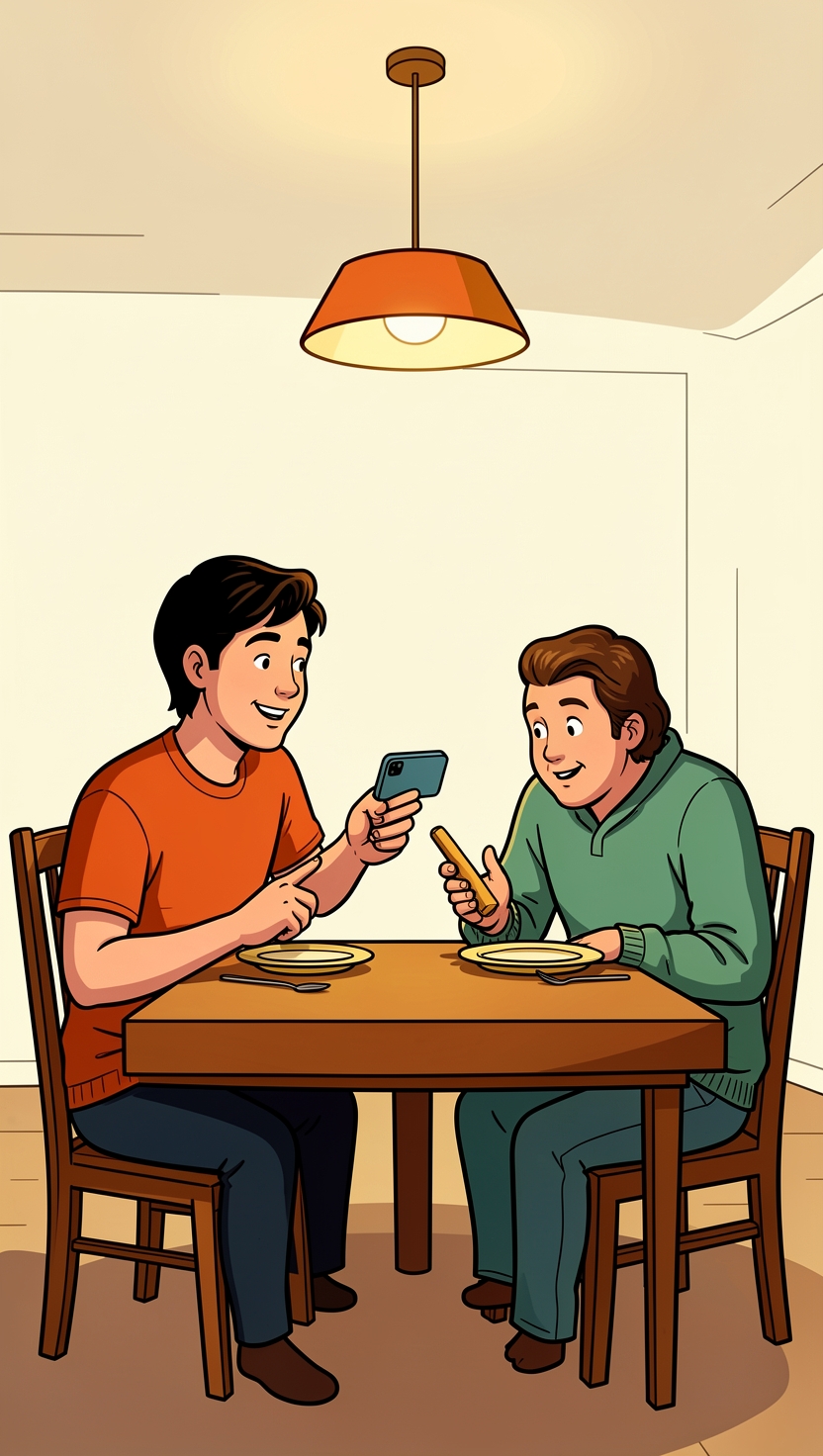
Your child holds up the phone at the dinner table. Can we make the Pulau Ubin photo look like a Ghibli one, with the grass and the clouds and everybody’s cheeks gone round? You hesitate, and you are not sure why. So you type “is ChatGPT safe for Ghibli” into a search box, and what comes back is about privacy settings and melting servers, none of it the thing that made you pause.
The thing that made you pause is a question about somebody else’s work. It is a good question, and it is the one Japan has been arguing about, in public, for two years.
Nobody owns a style. Somebody owns the drawing.
Start with the surprising part. Japan’s Agency for Cultural Affairs, which runs copyright policy in the country that produced the style everyone copies, has said fairly plainly that a style is not property. The agency’s March 2024 report on AI and copyright, as summarised by the Tokyo firm Nagashima Ohno & Tsunematsu, takes the view that “style” is just an idea, and that “it does not constitute copyright infringement even if an AI output has a common ‘style’ with existing copyrighted works”. The English summary circulated by the Asian Patent Attorneys Association puts it flatly: the Copyright Act “does not protect ideas or literary styles”.
So a soft meadow, warm light, a round-faced child in the middle of it. That look, by itself, is not anyone’s possession.
Now the other half, which is where the useful lesson lives. The same report treats it very differently when the machine is pointed at a specific work rather than a general look. It flags the case where “a work is reproduced in order to perform additional training to intentionally output all or part of the creative expression of the copyrighted work contained in the training data as it is”. A July 2024 government checklist, reported by The National Law Review, names as problematic the “additional learning of only a few works of specific creators” to reproduce their expression.
OpenAI drew a version of that line itself, with a blunter pencil. When the ChatGPT image generator set off the Ghibli wave in March 2025, TechCrunch reported the company’s position: the model refuses “the style of individual living artists” but permits “broader studio styles”. Look at the seam in that rule. Hayao Miyazaki is alive. The rule protects the artist as a person and lets the studio he built walk through.
The people who drew it have been saying so out loud
This is not a quiet disagreement, and a child can follow it.
On 28 October 2025, Japan’s Content Overseas Distribution Association, whose members include Studio Ghibli, Bandai Namco, Square Enix and Kadokawa, sent a written request to OpenAI about its Sora 2 video generator. CODA asked for two things: that members’ content not be used for machine learning without permission, and that OpenAI respond sincerely to member companies’ claims about copyright infringement in Sora 2’s outputs. The sharpest line in its case, reported by the Korean daily Kyunghyang Shinmun, is about sequence. Under Japanese copyright law permission comes first, and “there is no system that allows one to avoid liability for infringement through after-the-fact objections”.
An odd coda to that, if you will forgive it. On 1 April 2026 the association published a short notice saying OpenAI had reported it would discontinue Sora 2 as a product, app and API included. Worth knowing, and worth not over-reading. Sora was the video app. The image generator inside ChatGPT, the one your child is actually asking about, is a different product and a different conversation.
Where a Singapore family stands, legally speaking
The local footnote cuts against the instinct that the law will settle this for you. Singapore has one of the most permissive rules in the world for feeding copyrighted material to machines. Under the Copyright Act 2021, as the law firm Norton Rose Fulbright described it when the exception came in, lawfully accessed works may be used “for computational data analysis, such as sentiment analysis, text and data mining, or training machine learning, without having to seek the permission of each copyright owner”. It covers commercial use, and unusually, it cannot be switched off by a website’s terms and conditions. Britain and the European Union are both narrower.
That exception was written in 2021, before an image model could repaint a family photo while you waited. Our reading, and it is a view rather than a fact: a child growing up here will not absorb an instinct about creators’ work from the surrounding law, because that law is deliberately relaxed. Which leaves the household.
Four things worth doing at home
Ask “whose?” before you tap generate. Not as a moral test. Just say the name out loud: this look came from a Japanese animation studio, and people spent careers working it out. Naming a thing is most of the lesson.
Teach the two-part rule, because it is genuinely simple. A look is not owned. A character is. “Make our photo look like a warm hand-painted animation” and “draw Totoro standing next to us” are not the same request, and a ten-year-old can hold that distinction once someone hands it to them.
Make them draw it first. One pass by hand, badly, then the machine’s version, then look at both. That is the step that turns a consumer into a maker, the same instinct we wrote about in what kids build with AI.
Check the famous quote together. Your child will eventually meet Miyazaki’s line about AI being “an insult to life itself”, pasted under a Ghibli-style meme. It is real. As 404 Media set out, he said it in a 2016 documentary after being shown a 3D model animated by machine learning, which is not the same technology as a photo filter and was nine years earlier. Both halves are true, and pulling them apart is the fact-checking reflex we want kids to have anyway.
Japan’s own education ministry lands somewhere similar in its December 2024 guidelines for schools, which tell teachers to have students treat generative AI output “only as a reference, and ultimately to make their own judgments”.
We build AI mentors for children, so we have an interest in you feeling good about your child using AI. Which is why it is worth saying plainly: the picture takes a moment, and the look inside it took somebody a working lifetime. A child who knows that will still make the picture. They will just know what they are holding.
Was this useful?
Sources
- CODA Issues Written Request to OpenAI Regarding Sora 2 · Content Overseas Distribution Association (CODA)
- Receipt of Report from OpenAI Regarding the Termination of the "Sora2" Service · Content Overseas Distribution Association (CODA)
- Report on AI and Copyright Issues by Japanese Government · Nagashima Ohno & Tsunematsu
- General understanding on AI and copyright in Japan · Asian Patent Attorneys Association
- Japanese Government Published Checklist and Guidance Related to AI and Copyrights · The National Law Review
- Japanese game studios demand OpenAI stop "pilfering" their work · Game Developer
- 'Ghibli-style video generation' spurs Ghibli to draw its sword · Kyunghyang Shinmun
- OpenAI's viral Studio Ghibli moment highlights AI copyright concerns · TechCrunch
- New Singapore Copyright Exception will propel AI revolution · Norton Rose Fulbright
- Hayao Miyazaki, Who Said AI Is 'Insult to Life Itself', Reduced to AI-Generated Meme by OpenAI · 404 Media
- MEXT Publishes Guidelines on Using Generative AI in Schools · Institute of Intellectual Property, Japan