Japan's school AI rules are about timing. Borrow them for homework
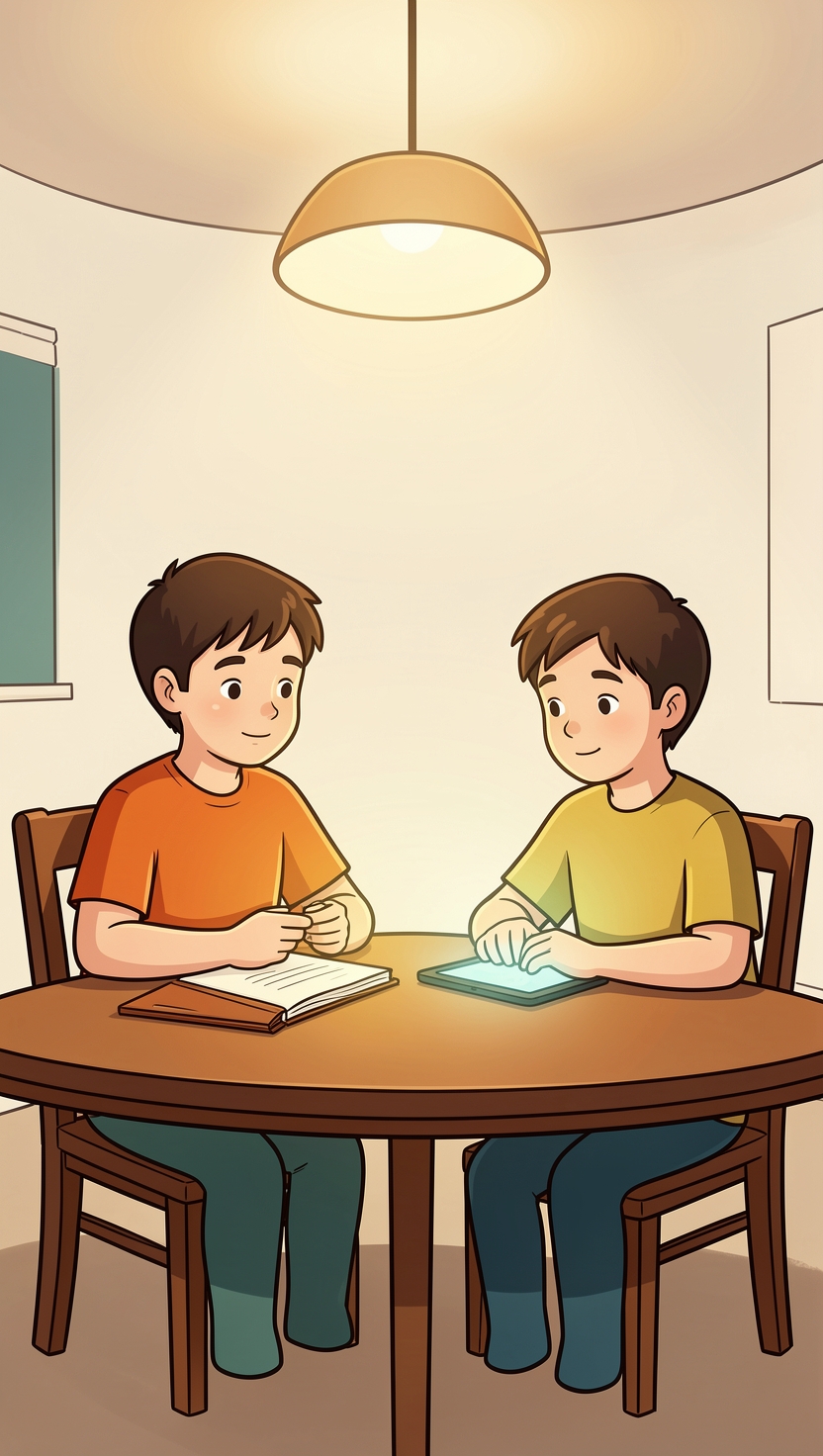
It is eight o’clock, the composition is due tomorrow, and the chatbot tab is already open. The family argument about that tab is usually a yes-or-no one. Allowed, or not allowed.
Japan’s education ministry skipped that argument. Its guidelines for schools on generative AI, published on 26 December 2024 as Version 2.0 of rules first issued provisionally in July 2023, spend much less energy on whether children should use AI than on when. Read closely, its list of bad uses is mostly a list of bad moments, which makes it a surprisingly good homework guide for families in Tampines.
The “not now” list
The guidelines are in Japanese, so the wording below is our translation. The ministry, MEXT, lists uses it considers inappropriate, stressing these are examples for each school to judge. Several are about sequence rather than the tool:
- letting students use AI freely before they have properly learned what it is, including its strengths and weaknesses
- reaching for it casually when the point of the task is the child’s own sensibility or originality, such as writing a poem or a haiku, or when a teacher asks for a first reaction
- using it to research a topic before turning to quality-assured material such as the textbook
- handing in AI output almost unchanged as your own report, short essay or competition entry
Put the second and third items side by side. The ministry is not saying a chatbot has nothing to offer a composition or a project. It is saying the child’s own attempt has to exist before the machine joins in. An AI that writes the first reaction has not helped with the first reaction. It has replaced it.
The list of good uses has the same shape. For group work, the guidelines suggest bringing AI in partway through, after the group has already discussed and summarised its ideas, to find the viewpoints it missed. Middle, not start.
The same worry is steering Japan’s next revision. At a committee meeting on 30 June 2026, the education news site ReseEd reported, the ministry set out plans to revise the guidelines promptly instead of waiting for the next curriculum overhaul. One of the issues listed was what translates as “excessive shortcuts in the learning process”, which the ministry labelled cognitive offloading. We looked at that idea in our piece on cognitive debt.
The draft trick worth stealing
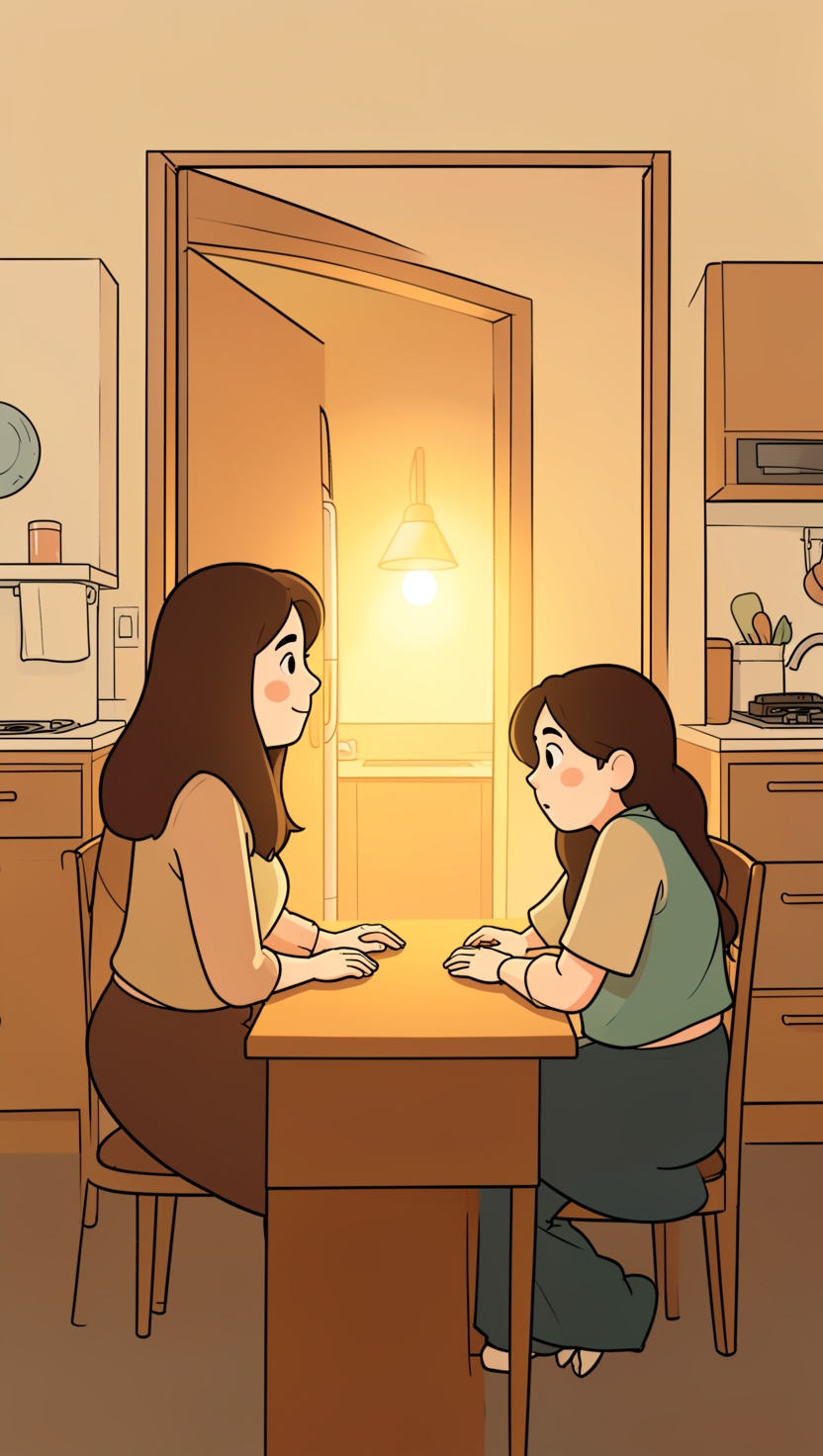
One suggestion in the guidelines is so practical it deserves its own section. A student writes their own piece first. They ask the AI to revise it, and treat that version as a たたき台, a rough block to work from. Then they rework it themselves, several times, and hand in the process as well as the result, using the tracked-changes feature in their word processor.
Think about what that shows a teacher, or a parent: which sentences came from the child, which from the machine, and what the child did with each suggestion. Every edit becomes a small decision.
The ministry adds two habits that move easily to a dining table. When AI output is quoted in schoolwork, say so the way you would cite a book: the name of the service, the prompt you typed, and the date. And to check that a piece of work has genuinely become the student’s own, it suggests having them present it out loud to the class or a group. At home, that is just “tell me what your essay argues”, with the page face down.
Why younger children start by watching
For primary school pupils, the guidelines call for “more careful” judgement about letting them use AI directly, given their stage of development. The suggested way in is led by the teacher, who shows the class many examples of their own conversations with AI, so children pick up the basics and build what the document calls a calm attitude towards it. Another listed good use is taking AI answers that contain mistakes and using them as teaching material, so children notice the tool’s limits for themselves.
One of the school examples at the back of the document does exactly that. A sixth-grade Japanese-language class at an Osaka primary school compared an article a teacher had produced with AI against a real article, then wrote down how they wanted to use AI in future. One pupil’s reflection, in our translation: it is important not to believe information on the internet straight away, but to compare it with other material and think from your own experience.
The guidelines also tell schools to make sure children do not type names, photos or other personal information into prompts, and to check each service’s latest terms, including age limits and whether a parent needs to consent.
The Singapore read
Singapore’s schools have reached a similar place by a different road. In a parliamentary reply on 6 May 2026, the Ministry of Education said schools will not assign Primary 1 to 3 pupils “any work that requires them to use AI directly”, and that from Primary 4 pupils use educational AI tools under teacher supervision. Then a line that could have come from Tokyo: “Schools will also teach students when they should not use AI, so that they do not take short cuts to get answers without actual learning.” We set those ages beside New York and China in an earlier piece.
Both ministries hit the same wall. Japan’s guidelines acknowledge that students may use AI outside school and ask schools to explain appropriate use to parents. MOE’s reply is about tools used in school. Neither reaches the tab open at eight o’clock.
A disclosure: Mentus AI makes an AI mentoring app that children use for homework help, so we have a stake in families using AI well rather than banning it. Our view is that the Japanese framing holds whatever tool a child uses. The order matters more than the app.
A three-line house rule
If you borrow one thing from this document, make it this, stuck up wherever homework happens:
- You go first. A sentence, a sketch, a guess at the answer, a first reaction. Something on paper before the tab opens.
- AI comes in the middle. Ask it what you missed or how the draft could be better, then decide for yourself what stays.
- Say it out loud at the end. If you can explain it without looking, it is yours.
Try it on tonight’s homework. The first line is the hard one, and it is the one that does the learning.
Was this useful?
Sources
- 初等中等教育段階における生成AIの利活用に関するガイドライン (Ver. 2.0), 26 December 2024 · Ministry of Education, Culture, Sports, Science and Technology (MEXT), Japan
- 文部科学省、「初等中等教育段階における生成AIの利活用に関するガイドライン(Ver.2.0)」を公表 · Current Awareness Portal, National Diet Library, Japan
- 文科省、生成AIとセキュリティ指針を改訂…次世代校務DX (3 July 2026) · ReseEd
- AI usage in schools (parliamentary reply, 6 May 2026) · Ministry of Education, Singapore