Where to report an AI fake of your child in Singapore
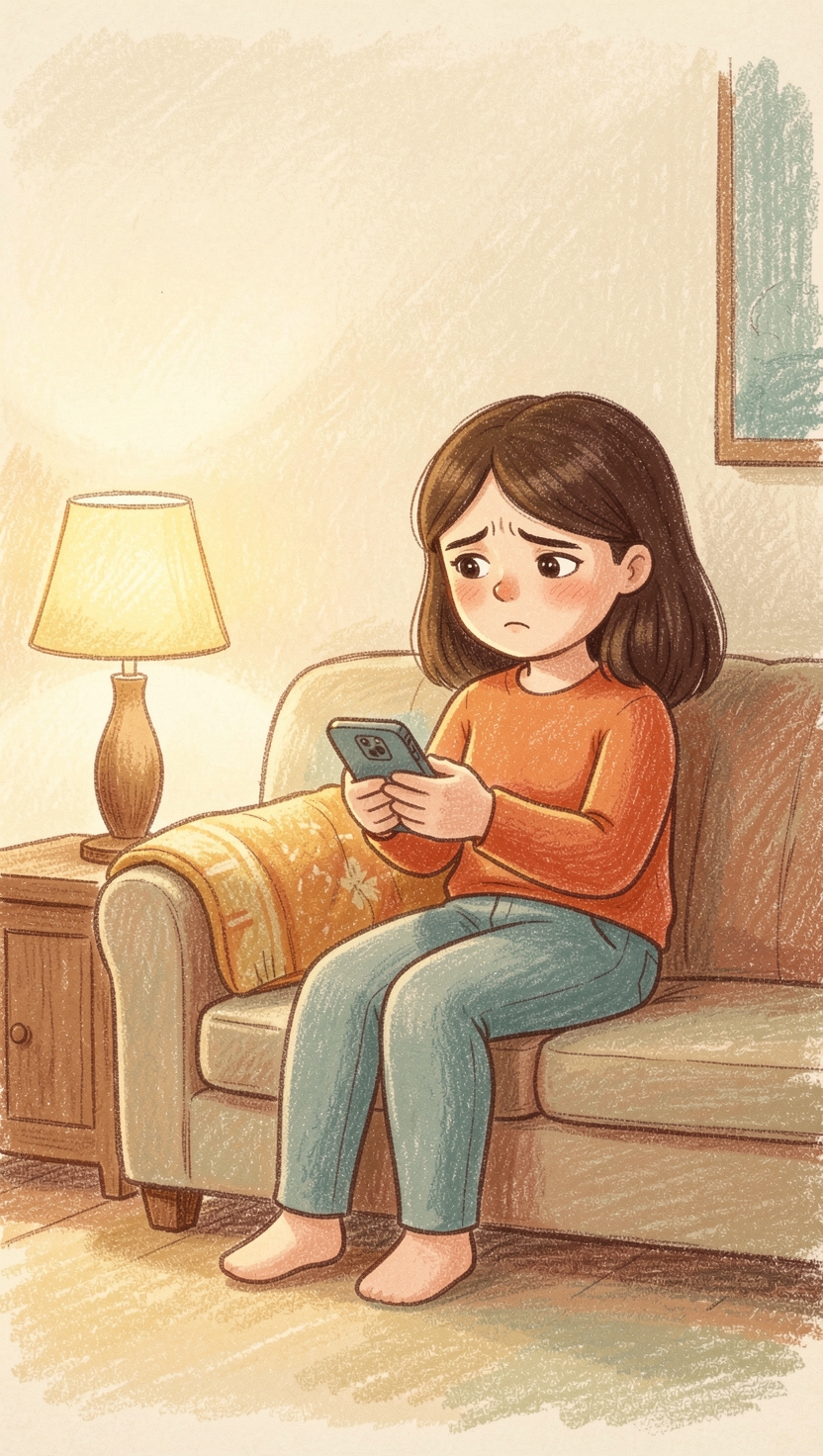
Picture a Tuesday night. Your fourteen-year-old comes to you with her phone, and on it is a photograph of her that she never posed for, because it was never taken. The face is hers. The rest was made by a free app that someone in her cohort found. It is already in a group chat that thirty of her classmates can read.
Until about a month ago, the honest answer to “what do we do right now” was thin, even in Singapore. You reported it to the platform. Then you waited. If the platform ignored you, what remained was a police report and, in theory, a lawyer.
That changed on 29 June this year, when the Online Safety Commission began operations. It does not solve the problem, but it is a real place to go, and the time to understand it is before the Tuesday night rather than during it.
Five categories, and one sentence that does the heavy lifting
The commission handles five kinds of harm in its first phase: intimate image abuse, image-based child abuse, doxxing, online harassment (including online sexual harassment), and online stalking. Its remit comes from the Online Safety (Relief and Accountability) Act 2025, and it is led by Commissioner Francis Ng, a lawyer with more than 25 years in the public service.
For a parent, though, the important words are eight of them, sitting quietly on the commission’s own website under both image categories. The images or videos, it says, “can be real or generated.”
That single line is why this matters for AI. Singapore did not write a separate deepfake statute for children. It defined the harm by what the image shows and what it does to the person in it, not by whether a camera or a diffusion model produced it. A picture of your child that never existed counts as a picture of your child. The “but it isn’t really her” defence, which is the first thing a fourteen-year-old will hear from whoever made it, is not a defence here.
Two doors, and one of them costs you a day
This is the practical bit, and it is the part worth memorising, because the route depends on what you call the thing that happened.
For intimate image abuse, image-based child abuse and doxxing, you go straight to the commission at osc.gov.sg. No waiting room.
For online harassment and online stalking, you have to knock on the platform’s door first. Only if the platform “fails to respond promptly or provides an inadequate response within 24 hours”, in the Ministry of Law’s wording, can you then file with the commission.
So a fabricated intimate image gets the fast lane. A pile-on in the comments underneath it does not. Same night, same child, two different procedures. Nobody is going to be thinking clearly enough to sort that out at 11pm, which is exactly why it is worth reading the categories once now, while nothing is wrong.

One more line from the ministry’s announcement deserves to be on a fridge somewhere: “Parents and guardians may file reports on behalf of victims who are under 18 years of age.” Your child does not have to be the one who files. She does not have to retell it to a stranger. You can carry that part.
What it can actually make happen
The commission can issue binding directions, and the range is wider than a takedown. It can order the content removed, restrict the perpetrator’s online account, or require that the victim be allowed to post a reply. Those directions can go to the person who posted, to the administrator of a group or page, or to the platform itself, and Baker McKenzie’s reading of the Act adds internet service providers and app stores. Ignoring a direction can be an offence carrying serious penalties.
Behind the commission sits the slower half of the Act. It creates statutory torts, which in plain terms means a victim now has a clear cause of action, and a court can award compensatory damages and injunctions. Allen & Gledhill’s note on the Act flags the piece that anonymity usually defeats: a victim can apply for disclosure of a perpetrator’s identity information in order to bring a claim. There is also an appeal route, through a six-member panel appointed for three years.
The gap you should know about
Here is the part a press release will not lead with. Phase one is five categories. The Act lists another eight to be “progressively implemented”, and that list includes online impersonation and inauthentic material abuse, alongside publication of false material.
Read that against what AI actually does to children. A fake account in your son’s name. A voice note in his voice. A clip of him saying something ugly that he never said, not sexual, so not intimate image abuse, and not aimed at him repeatedly enough to be stalking. That is a large and growing shape of harm, and today it sits in the queue rather than in the fast lane.
Our view is that the sequencing is defensible. The commission went after the harms that do the most damage fastest, and building a new body around the worst cases first is the right instinct. But parents should not walk away believing every AI fake now has a button. Some do. Some do not yet.
Ten minutes, before you need it
MDDI’s Digital Parenting Survey, run in February 2025 across 1,986 Singapore parents of children aged 2 to 17, found that nearly 9 in 10 had taken at least one step to manage their child’s digital life, and yet only 37% felt confident guiding their child’s digital habits. Exposure to inappropriate content topped their worries at 81%. That gap between doing something and feeling capable is not solved by another app. It shrinks when you know exactly what you would do.
So: open osc.gov.sg once, tonight, and read the five categories. Say the sentence out loud in your household, that a made-up picture of you is still a picture of you, and it is still something we can report. And tell your child the part that actually lowers the fear, which is that she will not have to file anything herself, because you can.
For the other half of this, the reason most of it comes from classmates rather than strangers, we wrote about the school deepfake problem earlier this month.
Disclosure: we build an AI mentor for children, so we have a commercial stake in how rules like this one land. Worth saying out loud.
Was this useful?
Sources
- The Online Safety Commission Begins Operations on 29 June 2026 · Ministry of Digital Development and Information, Singapore
- The Online Safety Commission Begins Operations on 29 June 2026 · Ministry of Law, Singapore
- Online Safety Commission and Online Safety (Relief and Accountability) Act 2025 to Start on 29 June 2026 · Ministry of Digital Development and Information, Singapore
- Online Safety Commission · Online Safety Commission, Singapore
- About us · Online Safety Commission, Singapore
- MDDI Study Shows Most Parents Guide Children's Digital Use But Would Like More Support · Ministry of Digital Development and Information, Singapore
- Online Safety (Relief and Accountability) Bill passed, establishes Online Safety Commission to address online harms and provide victim redress · Allen & Gledhill
- Singapore: New Online Safety Commission Launches on 29 June 2026 · Baker McKenzie