Roblox checks your child's face now. What it can't see
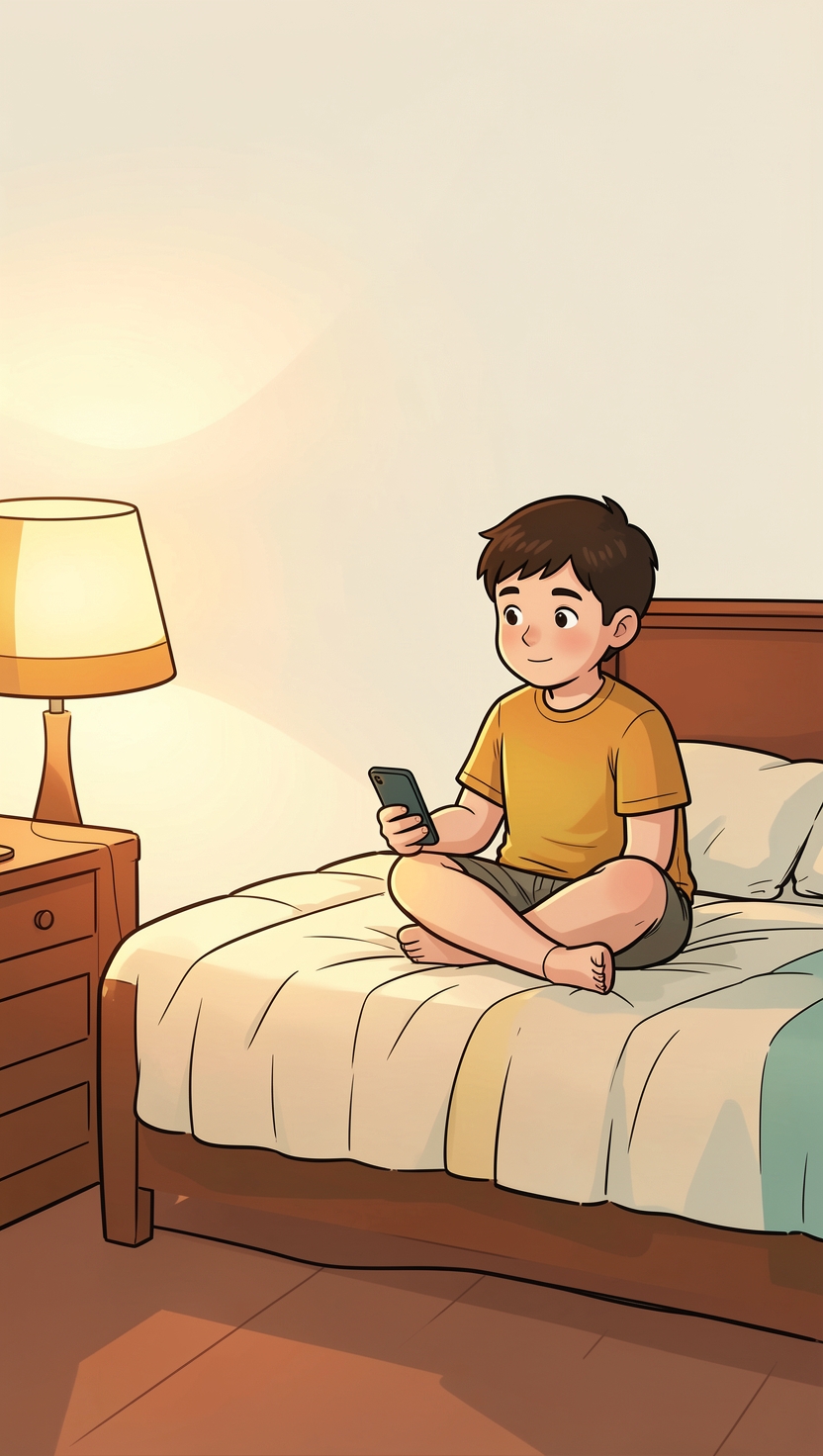
Sometime in January, a lot of children in Singapore opened Roblox and were asked to point the phone at their own face.
Not a birthday field. Not a tick box that any nine-year-old learns to lie to by Primary 3. A short video selfie, processed in seconds, so that software could estimate how old they are and decide who they are allowed to talk to.
That is a genuinely new thing, and it deserves more than a shrug or a shudder. It is also a much narrower promise than it looks.
What the check actually does
Roblox announced the requirement on 19 November 2025. It became mandatory in Australia, New Zealand and the Netherlands that December, reached the United States on 7 January 2026, and spread to every region where chat is available, Singapore included, over roughly the following week. Tens of millions of users had already been through it by then, the company said, including more than half of daily active users in the first markets.
The mechanics are simple enough to explain to a child. The camera captures an image and a short video, a vendor called Persona estimates an age from the facial features, and the player lands in one of six bands running from under nine to 21 and over. Chat is then restricted to nearby ages, the stated aim being to keep minors and adults out of each other’s messages. Roblox says the images and video are deleted immediately after processing. Players of 13 and above can use an ID check instead, and anyone who thinks the software got it wrong can appeal.
Matt Kaufman, the company’s chief safety officer, described the approach as building “proactive, age-based barriers”. As far as we can tell it is the first large gaming platform to make a face check the price of chatting, at every age.
Credit where it is owed. A birthday field is a form. This is a door.
The error bar is wider than some of the bands
Roblox cites a mean absolute error of 1.4 years for under-18s, from testing by the UK’s Age Check Certification Scheme. Take that at face value and the average guess is still out by more than a year, in a system where the band for 16 and 17 year olds is two years wide.
Independent testing is a shade less flattering. In the US National Institute of Standards and Technology’s ongoing face analysis evaluation, results reported in August 2025 put the best performer at just over two years of mean absolute error for ages 13 to 16, with the tenth-placed algorithm closer to four. Guessing a teenager’s age from a face is hard, because teenagers vary. That is not a scandal. It is arithmetic.
Roblox appears to expect the misses, which is why there is an appeal route, an ID option, and a monitoring system called Sentinel that the company says “helps detect early signals of child endangerment” and will start asking some users to repeat the check when their behaviour does not match their age.
The broader verdict is cautiously positive. Australia’s Age Assurance Technology Trial, which tested more than 60 technologies from 48 vendors and reported in 2025, found no substantial technological barrier to doing age checks properly, though it flagged sloppy data retention as unfinished business. Better than nothing, imperfect by design, worth doing. Which leaves the part a face scan was never going to solve.
An age band is not a friend list
Here is where the local numbers earn their place. In a door-to-door survey run for the government from October 2022 to February 2023, covering 810 Singaporean youths aged 10 to 18 and their parents, about one in two young people (47%) gamed every day. Only three in ten parents (31%) were fully aware of who their child gamed with, and a quarter were not at all aware. Around 36% of the young people said they played with strangers sometimes or frequently, and 38% of the 13 to 18 year olds had met vulgarities or violent content in games. The survey is a few years old, worth saying plainly, but nothing since suggests parents have got better informed.
Read those two things next to each other. The platform now knows, to within a year or two, how old the other player is. The parent still mostly does not know who the other player is.
Age sorting does nothing about a same-age player being vicious in chat, or a friendship that starts inside a game and moves to a messaging app where no bands exist. And Roblox’s Trusted Connections feature deliberately lets players link with people they say they know and talk across the age lines: reasonable product design, and the obvious seam.
Singapore’s own gate is somewhere else
At the Committee of Supply debate on 2 March 2026, Minister of State Rahayu Mahzam said that “some parents have expressed concerns about harms that online video games bring, including exposure to inappropriate content, cyberbullying, and screen addiction”, and that the ministry is studying whether safeguards for online games and AI chatbots are needed. The age assurance Singapore has actually legislated sits at the app store, with an extension to social media services under consultation through 2026.
So on this question the company moved first and the regulator is still reading. Not a criticism of either. Just the position parents are standing in, and it explains why the useful work is at home. The government’s own digital parenting survey found 81% of parents worried about their child seeing inappropriate content, and only 37% confident about guiding their child’s digital habits.
Four things worth doing this week
- Check that the age check ran on your child’s own account, not on yours while they watched.
- If the band came out wrong, appeal it. A twelve-year-old parked in a teen band is a real exposure, and the ID and parental-control routes exist for exactly this.
- Ask who, by name. “Who did you play with this week, and how do you know them?” beats “how long were you on?”, and the survey above suggests most of us are not asking it.
- Ask what is on the Trusted Connections list, because that list is the exception to everything above.
A face scan can answer one question, roughly: how old is this person. The questions that actually keep a child safe in a game are who is talking to them and what is being said, and those still belong to the adult in the house.
Disclosure: Mentus AI builds a mentoring app used by children, so we have a commercial interest in how age checks and child accounts work. Weigh our view accordingly.
Was this useful?
Sources
- Roblox Requires Users Worldwide to Age-Check to Access Chat · Roblox, via Business Wire
- Roblox rolls out facial age estimation for chat access globally · Biometric Update
- Roblox to make age assurance for chat mandatory as of January 2026 · Biometric Update
- Latest NIST age estimation test shows gains by Cognitec, Idemia, Innovatrics, Yoti · Biometric Update
- Australia releases Age Assurance Technology Trial final report · Biometric Update
- Speech by MOS Rahayu Mahzam at the Committee of Supply Debate 2026 · Ministry of Digital Development and Information, Singapore
- MCI's Survey Suggests Low Awareness among Parents on Child's Online Gaming Activities · Ministry of Digital Development and Information, Singapore
- Singapore's Next Steps in Building Child-Safe Digital Environments (Factsheet) · Ministry of Digital Development and Information, Singapore