AI voice cloning scams: when the call sounds like your child
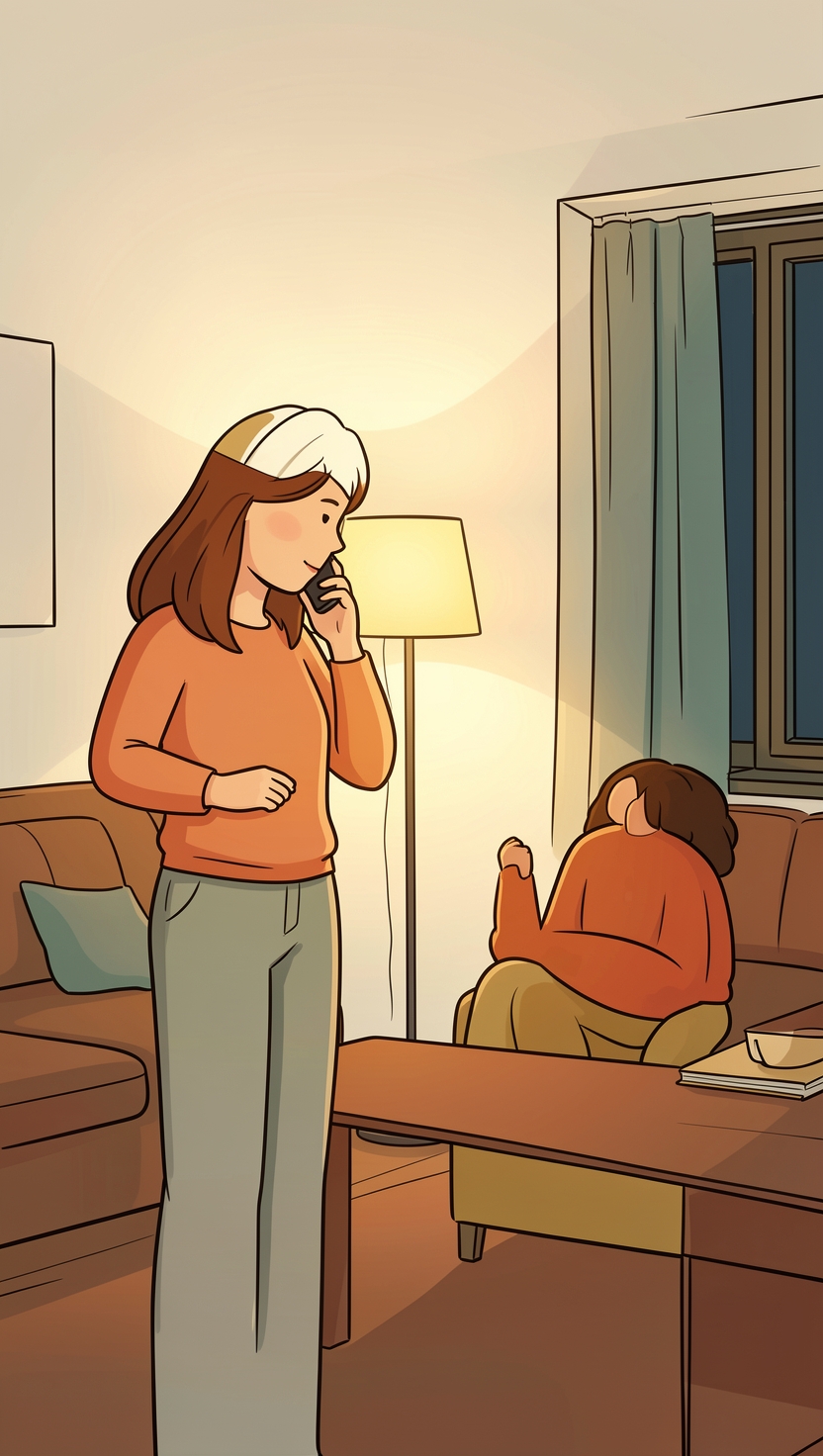
The phone rings and it is your child. Upset, rushed, in some kind of trouble, and needing money sent right now. Every instinct a parent has says act first and ask questions later.
That instinct is exactly what an AI voice cloning scam is built to use. The good news is that the defence is old fashioned, free, and takes a few minutes to set up at home. The less comfortable news is that it starts with accepting something most of us have never had to think about: a voice you know is no longer proof of who is speaking.
A familiar voice is not evidence any more
In a study published in PLOS One in September 2025, researchers at Queen Mary University of London asked listeners to judge a mix of real human voices and AI clones of real people. In one experiment, listeners labelled the clones as human 58% of the time and the genuine recordings as human 62% of the time. In another, the figures were 70% and 72%. The fakes did not sound more real than people, but listeners could not reliably tell the two apart.
The clones were not the work of a specialist lab. They were made with commercially available software, and Dr Nadine Lavan, who led the study, said the process “required minimal expertise, only a few minutes of voice recordings, and almost no money.”
The tools are easy to reach, too. When Consumer Reports examined six popular voice cloning products in March 2025, it found that four of them asked users to do little more than tick a box or otherwise declare they had the right to clone the voice. Only Descript and Resemble AI had taken real steps against misuse.
The FBI described what criminals do with this in a December 2024 alert: they “generate short audio clips containing a loved one’s voice to impersonate a close relative in a crisis situation, asking for immediate financial assistance or demanding a ransom.”

In Singapore, the script has already arrived
Here is the part worth being precise about. Singapore does not publish a count of scams that used a cloned voice. When an MP asked in July 2026 how many reports the police had received of AI-generated deepfakes impersonating public figures, businesses or government agencies, Home Affairs Minister K Shanmugam replied that “The Singapore Police Force (SPF) does not track the requested data”, explaining that working out whether content was made by AI needs forensic examination that is not always conclusive. So anyone quoting you a local figure for voice clone scams is guessing.
What the police do count is the story these scams tell. The SPF’s Mid-Year Scam and Cybercrime Brief, released in August 2026, recorded 391 cases in the first half of the year where scammers approached the contacts of compromised WhatsApp accounts. They cited reasons such as an emergency loan or a problem with a bank transfer, and victims typically realised only after checking with the real owner of the account. That is the family emergency con, arriving as text from a trusted name. A cloned voice is the same trick with the sound turned on.
AI audio has already turned up in scams here as well. In May 2026, the SPF published footage from a fake Zoom call impersonating senior government officials, noting that the speech “did not synchronise with speakers’ lips, indicating that inauthentic audio was layered on.”
Where your child’s voice comes from
A clone needs a sample, and children’s voices are more public than most of us notice. A dance video, a school performance someone posted, a chatty clip on a public account. The FBI’s advice is to “limit online content of your image or voice, make social media accounts private, and limit followers to people you know.”
That is worth doing, and it is a good reason to look again at who can see your child’s videos. But we don’t think any family should rest its safety on nobody ever hearing their child speak. A voice leaks in too many ordinary ways. The defence has to work even when the scammer has a perfect copy.

The check that still works
It is not clever, and that is the point. Singapore’s official advice and America’s land in the same place.
- Hang up and call back on the number you already have. The US Federal Trade Commission put it bluntly in 2023: “Don’t trust the voice. Call the person who supposedly contacted you and verify the story.” If you cannot reach them, try another family member or a friend who would know where they are.
- Agree a family word. The FBI recommends you “create a secret word or phrase with your family to verify their identity.” Singapore’s Cyber Security Agency makes the same point, suggesting you verify by “reaching out to the person directly through another communication channel or asking them about something known only between the two of you.” Choose something that has never appeared online, so not the dog’s name from your Instagram.
- When unsure, ask someone outside the panic. The 24/7 ScamShield Helpline is 1799.
One thing we would add, as the desk’s own view: make it work in both directions. A child who gets a call or voice note from “Mum” asking them to share a one-time password, approve something on a phone, or keep the call secret should know that this is exactly the moment to hang up and ring Mum back. Children are scam targets in their own right. The same police brief shows people aged 19 and below made up 6.6% of scam victims in the first half of 2026, most commonly responding to scammers on messaging platforms, shopping platforms and social media.
Set it up over dinner, as a small family ritual rather than a scary talk. Pick the word together, then practise once: one person rings with a made-up emergency and the other asks for the word. Treat it like a spy game if that helps. A pause you have rehearsed is far easier to reach for than a lecture you half remember.
If an AI-made fake of your child is ever shared online rather than used in a call, the route is different, and we have covered how to report fake images of your child in Singapore.
The cloned voices will keep getting better. The call back will keep working, because a scammer can copy how your child sounds but cannot answer the phone in your child’s pocket.
Was this useful?
Sources
- Mid-Year Scam and Cybercrime Brief 2026 · Singapore Police Force
- Footage From Zoom Video Conference Involving Impersonation Of Senior Government Officials · Singapore Police Force
- Reports and enforcement actions involving AI-generated deepfake content impersonating public figures, businesses or government agencies · Ministry of Home Affairs, Singapore
- Advisory on Detecting and Responding to Deepfake Scams · Cyber Security Agency of Singapore
- Criminals Use Generative Artificial Intelligence to Facilitate Financial Fraud · FBI Internet Crime Complaint Center
- Scammers use AI to enhance their family emergency schemes · US Federal Trade Commission
- Voice clones sound realistic but not (yet) hyperrealistic · PLOS One
- AI-generated voices now indistinguishable from real human voices · Queen Mary University of London
- New Report: Do These 6 AI Voice Cloning Companies Do Enough to Prevent Misuse? · Consumer Reports
- Consumer Reports finds popular voice cloning tools lack safeguards · TechCrunch