What AI can do while your child waits for early intervention
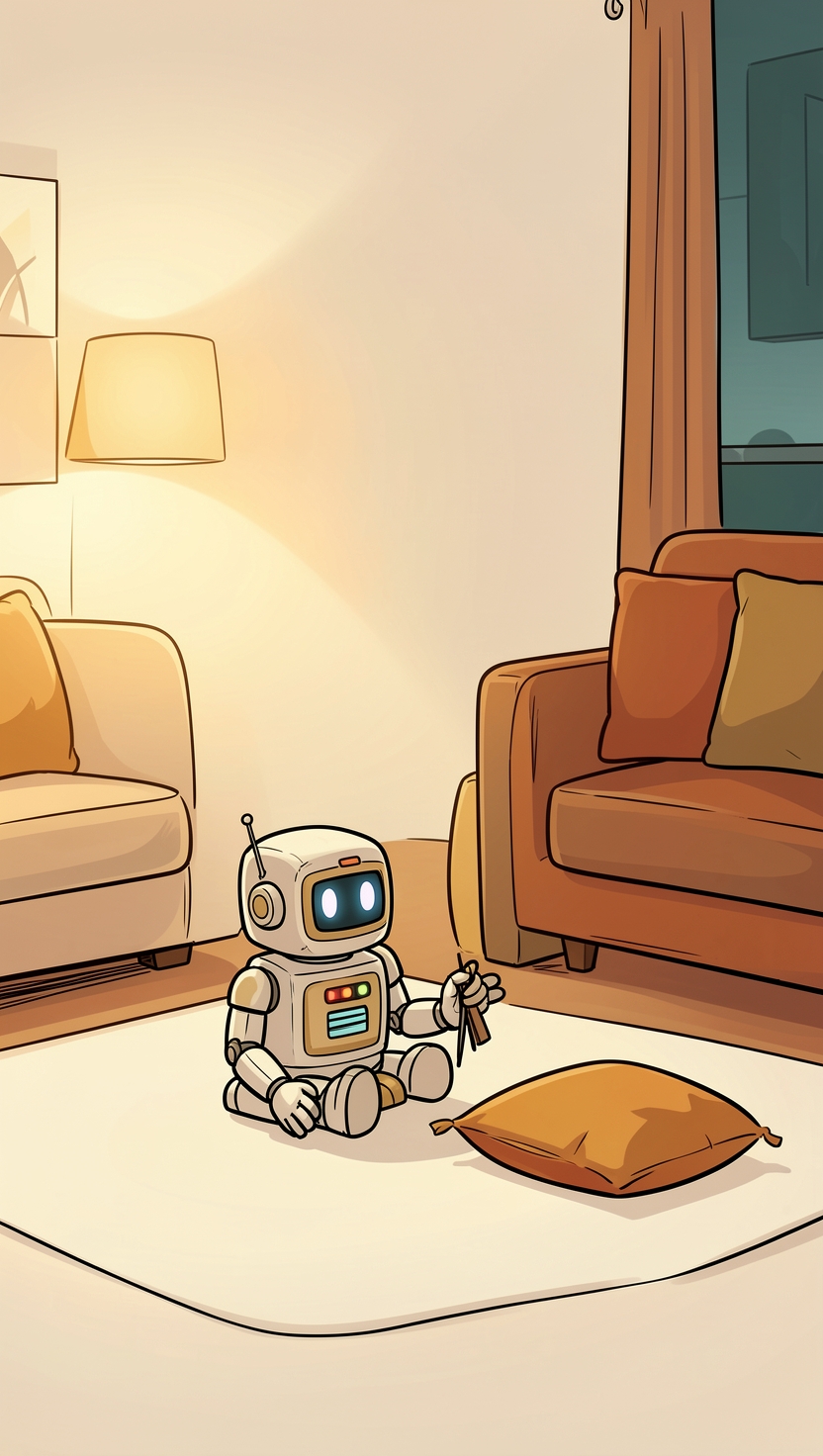
The paediatrician says a word. Speech delay, perhaps, or a referral for a full developmental assessment. There is a form. And then there is a queue.
Singapore put a number on that queue this July. In a written parliamentary reply, the Ministry of Social and Family Development said the average wait for a place in the Early Intervention Programme for Infants and Children, EIPIC, was 5.5 months in 2025, down from 7.5 months in 2023. Places grew by around 25 per cent over the same stretch, from roughly 5,800 to 7,300. That is a genuine improvement.
It is also still five and a half months in the life of a three-year-old.
This is usually the point where AI gets sold to parents, and usually the wrong AI. The robot companion. The app that promises therapy at home. The tools that actually earn their place in these months are duller than that, and better.
The screening is where the machine is genuinely good
The clearest evidence sits at the front of the process, before any waiting list. Researchers at Duke built a tablet app called SenseToKnow that plays short videos and a bubble game while the camera watches how a toddler looks, moves and reacts. In a study published in Nature Medicine in October 2023, it was run with 475 children during routine well-child visits and reached 87.8 per cent sensitivity and 80.8 per cent specificity. On its own, a positive result meant a 40.6 per cent chance of an autism diagnosis. Combined with the standard parent questionnaire, that rose to 63.4 per cent, against roughly 15 per cent for the questionnaire alone.
The 2025 follow-up matters more for families, because it moved the whole thing out of the clinic. Writing in NEJM AI, Dawson and colleagues had caregivers run the app at home with 620 toddlers aged 16 to 40 months. Most finished in under twenty minutes. Accuracy held up, with an area under the curve of 0.92, sensitivity of 83.0 per cent and specificity of 93.3 per cent, and performance stayed consistent across ages, genders and ethnic backgrounds. It also picked up some autistic children that the widely used M-CHAT questionnaire missed.

Read that carefully, because it is easy to over-read. None of it is a diagnosis. A screener’s job is to decide who should be seen by a human clinician sooner, and the honest gain is measured in weeks saved at the start, not in therapy delivered. Both studies were run in the United States, not here. But the principle travels: the cheapest way to shorten a five-month wait is to stop losing months before the referral is even written.
The robot in the room
Now the part parents are actually offered in the shops.
A systematic review published in Brain Sciences in 2025 by Tsapanou and colleagues pulled together eight studies from 2020 to 2025, covering humanoid robots such as NAO and iCub, a robotic dog, a minimal plant-shaped robot, gaze-tracking systems and EEG monitoring. The findings look encouraging on paper: improvements in joint attention, social communication and reciprocity, emotion recognition and regulation, theory of mind, and task engagement. The authors then list their own caveats, and they are large ones. Small and heterogeneous samples. Short interventions. Outcome measures that vary from study to study. Limited use of standardised assessments, and the real possibility of novelty effects.
Then there is a study that comes at the question from a smarter angle. A team led by Yibo Meng, accepted for the 2026 Interaction Design and Children conference, gave a commercial social robot to 40 autistic children aged five to nine for eight weeks at home, then took it away from half of them. The group that kept the robot showed significantly reduced anxiety, which is not nothing. But the group that lost it showed greater improvements in social motivation, emotion understanding and empathic behaviour towards caregivers and peers. The authors call the pattern handoff versus siloing, and their conclusion is the line worth pinning to the fridge: high engagement does not guarantee social transfer.
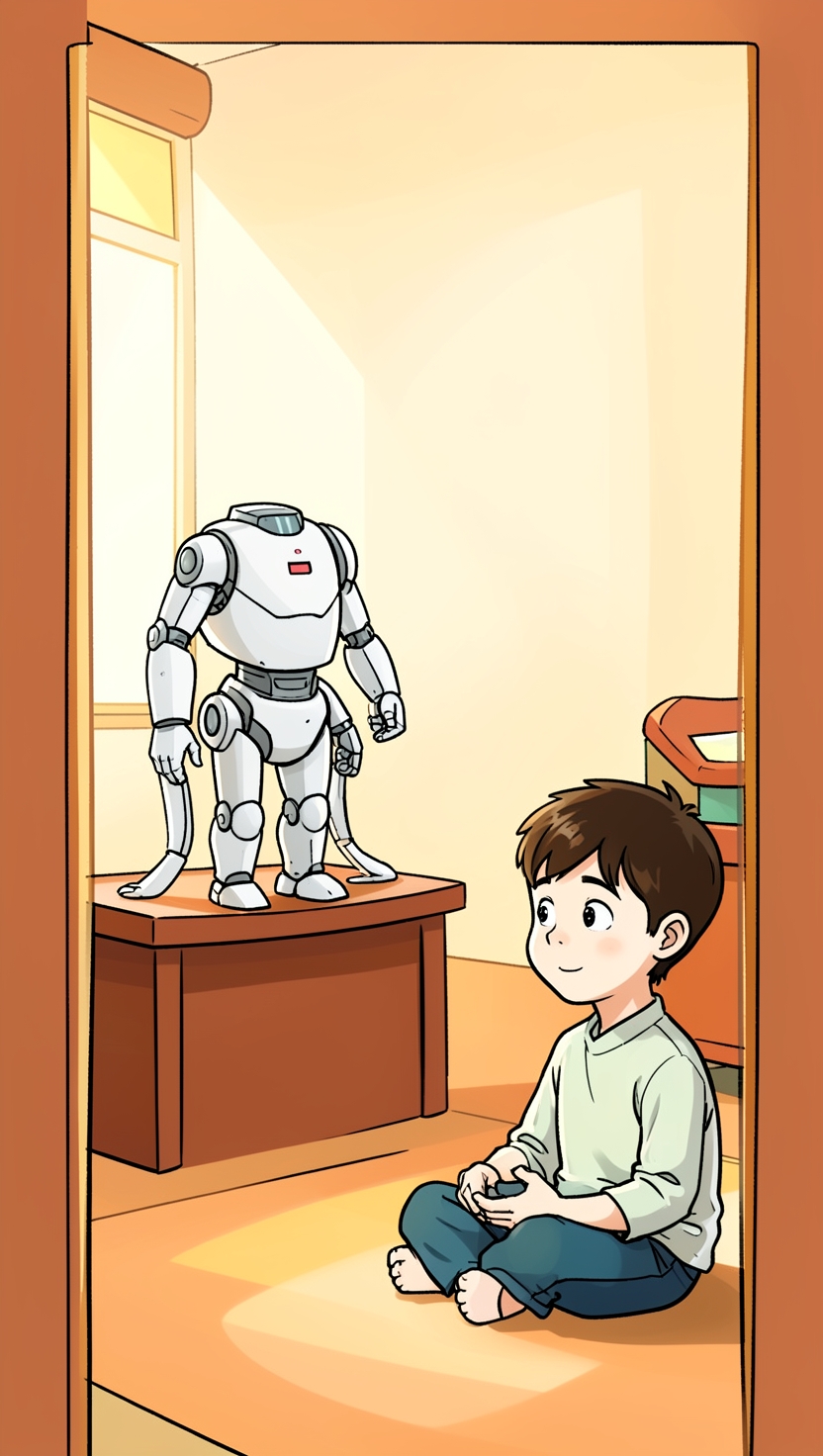
One small study, not yet peer reviewed, so hold it loosely. It still names the risk with unusual precision. A child can be delighted by a machine, and that delight can stay with the machine.
The gap that no product is filling
There is a third finding, and it is the Singaporean one.
A 2025 paper in Frontiers in Public Health interviewed 33 parents and 27 clinicians here, between April 2023 and November 2024, about early childhood intervention services. It notes that the number of preschoolers with developmental issues in Singapore more than doubled, from 2,502 in 2010 to 5,270 in 2019. What the parents talked about was not therapy technique. It was cost, scheduling, and being lost. One put it plainly: there are many services like EIPIC and the development support programme, “but nobody really explains to you what is good for your kids”.
That is not a clinical problem. It is an information problem, and it happens to be the one thing a general-purpose AI assistant is genuinely competent at, so long as you treat it as a reading aid and not an authority. Getting a plain-English version of an assessment report before you sit down with the therapist. Turning a home programme into something you can actually run on a Tuesday night after dinner. Drafting the six questions you want to ask in a fifteen-minute appointment, so you do not remember them in the carpark afterwards.
We build AI mentors for children, so take that as our bias declared. It is also not the product we sell, and nothing we make is a clinical tool.
Ask what starts now
The most useful sentence in that MSF reply is the one nobody quotes. It says EIPIC operators support children and their families from the point of referral, not just upon enrolment, including training for caregivers, and that SG Enable and CaringSG run a caregiver programme called Step One for exactly this stage.
So the months in the queue were never meant to be empty. If you are in them, the call to make this week is to the operator you have been referred to, asking what support begins now rather than on enrolment day. Bring the AI for the paperwork and the questions. Leave the therapy to the people trained for it, and spend the waiting on the thing every one of these studies quietly agrees about, which is the child practising with you.
Was this useful?
Sources
- Changes to Average Wait Time for EIPIC Placements and Interim Support for Families Awaiting Placement · Ministry of Social and Family Development, Singapore
- Challenges and opportunities for early childhood intervention services in Singapore: addressing user satisfaction · Frontiers in Public Health (2025)
- Validation of a mobile app for remote autism screening in toddlers · Association for Child and Adolescent Mental Health
- Tablet-based AI app measures multiple behavioral indicators to screen for autism · Duke Center for Autism and Brain Development
- Application of Artificial Intelligence Tools for Social and Psychological Enhancement of Students with Autism Spectrum Disorder: A Systematic Review · Brain Sciences (2025)
- Engagement Is Not Transfer: A Withdrawal Study of a Consumer Social Robot with Autistic Children at Home · arXiv, accepted at Interaction Design and Children 2026