Beijing's robot games, and the joy of watching them fall
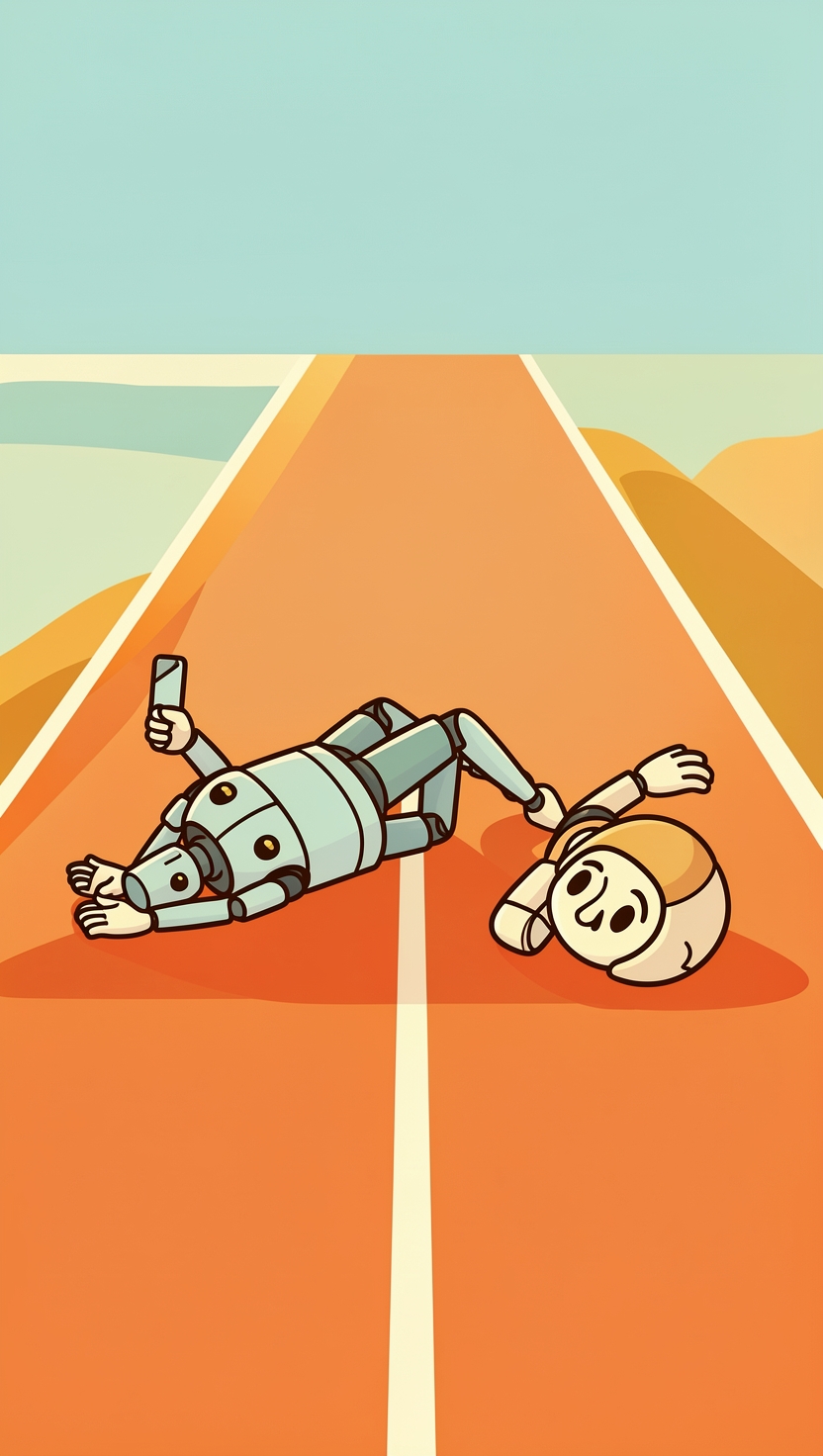
At the first World Humanoid Robot Games in Beijing last August, a robot ran the 1,500 metres and its head came off on a bend. Not metaphorically. The head detached. Another machine in the same field lost an arm. Some never left the starting line at all.
I mention this not to be unkind to the robots. I mention it because it is the single most educational thing about the whole event, and because the second games open in Beijing on 22 August, which gives you about a week to decide whether to watch any of it with your child.
The numbers are faintly ridiculous, and that is half the fun
This year’s games run from 22 to 26 August at the National Speed Skating Oval, the venue Beijing built for the 2022 Winter Olympics and still calls the Ice Ribbon. The Beijing municipal government says 666 teams are bringing 2,056 robots, from 16 countries across six continents, for 51 events and 1,301 separate competition sessions. China Daily reports the number of teams is up 138 per cent on last year, and the number of robots has doubled.
The event list reads as though somebody raided a school sports day and a hotel lobby at the same time. Track and field. Football. Freestyle fighting, weightlifting, gymnastics, martial arts. Street dance, ballroom and cheerleading, which between them have drawn 108 teams this year, up from 29. Then the scenario events: obstacle racing, precision tasks with robotic hands, emergency response, hotel service. Tickets start at 98 yuan.
The organisers have also made it harder. Autonomy requirements are stricter this year, and the time limit on the 100 metres has been cut from three minutes to one. That second detail tells you more about the state of the art than any press release. A year ago, three minutes for 100 metres was considered a reasonable ask of a walking machine.
Why the falling over is the good bit
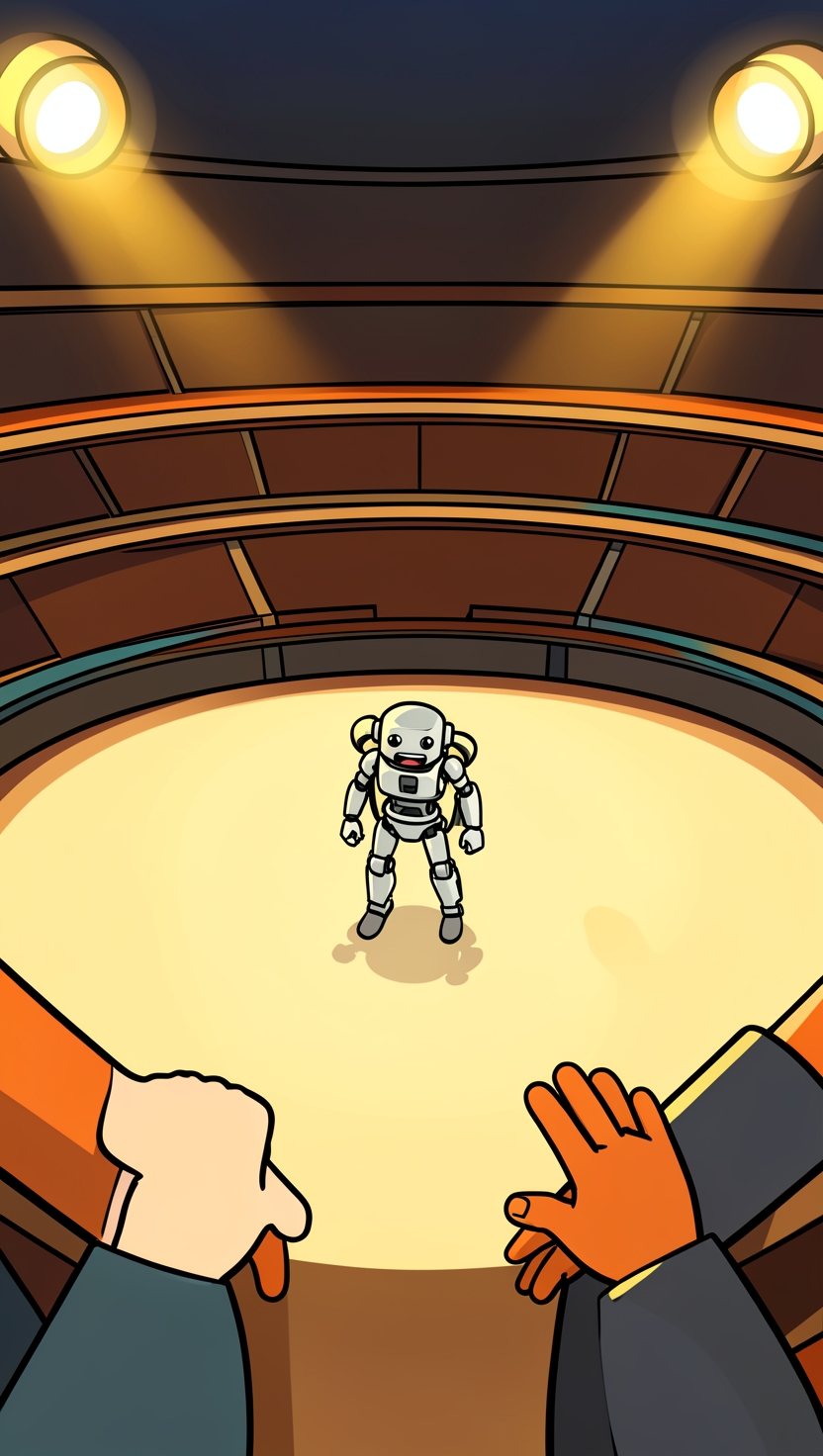
Last year’s games had 280 teams, more than 500 robots and 26 events, and Smithsonian Magazine’s account of it is essentially a catalogue of pratfalls. Unitree’s H1 won the 1,500 metres in 6 minutes 29 seconds, against a human record of 3 minutes 26. Kickboxing robots toppled over when they missed a kick. Football robots went down after the lightest contact. Robots sent out purely to entertain the crowd, waving and playing instruments, ended up on the floor and had to be carried off by people.
Here is the part worth handing to a child. The thing that looks impressive on a phone screen, the talking and the writing and the instant answers, is the easy half. Walking across a polished floor without falling is the hard half. Jonathan Aitken, an engineer at the University of Sheffield, told Smithsonian: “The state of A.I. is nowhere near seeing humanoids operating out of uncontrolled environments.”
Popular Science made the same point from another angle, citing the Meta scientist Yann LeCun’s estimate that a four-year-old has already taken in fifty times more data than the biggest language models. Sit with that for a second. Your seven-year-old has spent seven years running unsupervised physics experiments: falling off things, catching things badly, discovering exactly how far a chair tips before it goes. That is a training run no lab can buy.
So when a child laughs at a robot face-planting, they are not being told AI is stupid. They are learning where its edges are. That is a more durable lesson than any list of what chatbots can and cannot do, because they worked it out themselves, from evidence, while enjoying it.
Falling is even a research subject in its own right. Popular Science notes that Disney Research has built a system that teaches robots to fall safely, using reinforcement learning across thousands of simulated falls to limit the damage. Somewhere there is an engineer whose job is teaching a machine to tumble well. Children find this delightful, and they are right to.
The same lesson is running in a Singapore hall this fortnight
You do not need a flight to Beijing. Singapore’s National Robotics Competition, which Science Centre Singapore has run since 1999 with support from the Ministry of Education, is on right now: the 2026 competition runs from 17 to 28 August, with the awards ceremony on 1 September at the Science Centre. More than 68,000 people have taken part over the years.
What makes it useful for our purposes is how young it starts. There is a preschool KUBO challenge for five and six-year-olds, a regular LEGO-based category running from lower primary to tertiary, an open project category, and an AI Maker Series for ages seven to seventeen built around machine learning. In all of them the child designs, builds and programmes something autonomous, then watches it fail on a table in front of an audience, then fixes it.
That loop is the entire point. It is also, quietly, the opposite of what a child gets from asking a chatbot for an answer. We have written before about what China’s schools are doing with AI, and the robot games are the same national project in its most cheerful costume: build the thing, race the thing, watch the thing fall over, build it better.
If you watch one clip with your child this week
Pick a fall. There will be many. Then ask two questions, in this order: why did it go down, and what would you change?
The first question makes a child think about balance, friction, sensors and reaction time rather than magic. The second turns them from an audience into an engineer, which is roughly a five-second intervention with a very long tail. You do not have to know the answers. Nobody in the arena fully does either, which is exactly why they are still holding races.
Was this useful?
Sources
- World Humanoid Robot Games draws 2,056 entries to Beijing · China Daily
- 2nd World Humanoid Robot Games: Highlights & Ticket Info · Beijing Municipal Government
- World's First 'Robot Olympics' Featured Soccer, Kickboxing and Lots of Falling Down · Smithsonian Magazine
- 2025 proved humanoid robots are here to stay. And fall down. · Popular Science
- National Robotics Competition · Science Centre Singapore