China teaches every child AI, and bans AI friends for them
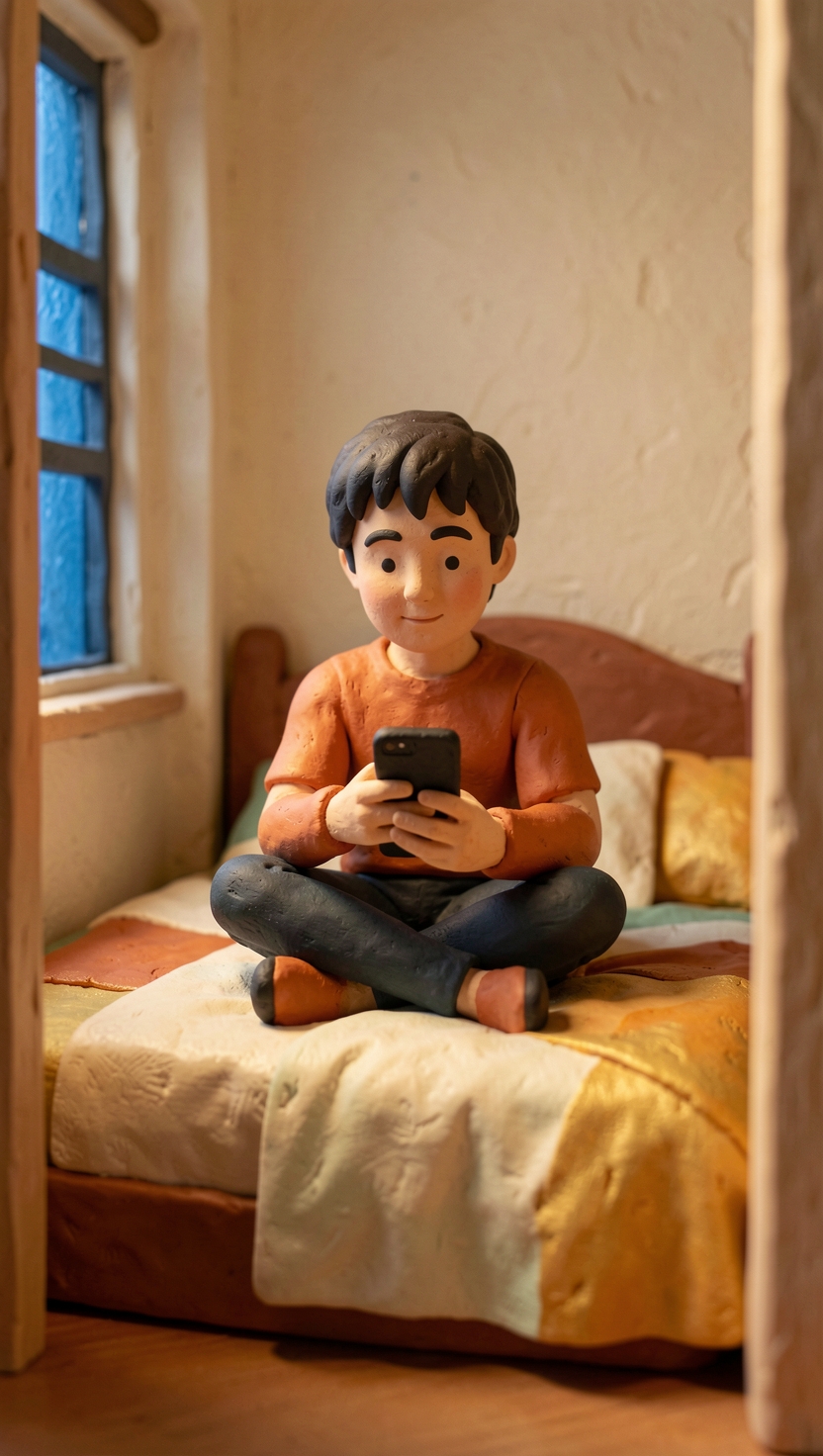
On 15 July, a lot of Chinese teenagers lost a friend.
That is more or less what happened when the country’s new rules on human-like AI came into force. ByteDance switched off the companion feature inside Doubao, its flagship chatbot, and gave users three months to move their conversations before permanent deletion on 15 October. Alibaba shut the equivalent service on Qianwen straight away, Sixth Tone reported. Other platforms started asking for ID.
What makes this worth a Singapore parent’s attention is not the ban itself. It is where China chose to put the line.
The rule is about a relationship, not a dosage
The measures were announced by the Cyberspace Administration of China on 10 April 2026, jointly with four other central bodies, and took effect on 15 July. They are usually translated as the Interim Measures for the Administration of AI Anthropomorphic Interaction Services, and they cover AI that, in the wording of the December 2025 consultation draft summarised by the law firm Mayer Brown, simulates “human personality traits, modes of thinking, and communication styles” or engages “in emotional interaction with humans”.
For anyone under 18, providers may not offer virtual intimacy services, which CGTN reported as “virtual relatives or romantic partners”. For children under 14, companies must get explicit consent from a parent or guardian before providing any other form of human-like AI interaction. Where addiction is suspected, platforms have to prompt a break every two hours. The draft went further on the plumbing: a minor mode the system enters automatically once it identifies a child, plus guardian controls over usage limits and in-app purchases.
Look at the shape of that. It says nothing about how many minutes a child may chat, which model they use, or whether the answers are accurate. It removes one category of use: the machine as somebody.

In the same country, AI class is compulsory
Here is the part that gets lost when this is reported as a crackdown.
China is simultaneously putting AI into the school day for everyone. In May 2025 the Ministry of Education issued two guidelines, one on general AI education and one on using generative AI in schools, aiming to move AI teaching “from localized pilots to nationwide implementation”. Primary school is for “sparking interest and building foundational cognitive understanding”, junior high for technical principles, senior high for “systems thinking and innovation”. In April 2026, five central departments led by the ministry announced an AI and education action plan to “accelerate the popularization of AI education”, with Beijing already requiring “at least eight class hours of AI courses per academic year”.
And inside those same 2025 guidelines sits a line that rhymes with the companion ban. At the primary level, People’s Daily reported, “students are prohibited from independently using open-ended content generation tools”. Teachers, meanwhile, may not use generative AI as a substitute for their core teaching role, and are barred from relying directly on AI to answer students’ questions.
So the policy is not pro-AI or anti-AI. Taught, yes, from six years old. Handed to a seven-year-old as an answer machine, no. Offered to a fifteen-year-old as a confidant, no.

What they were looking at when they drew it
A nationwide survey by the China Youth and Children Research Center, covering more than 8,500 primary and secondary students across seven provinces and cities and reported by China Daily in April 2026, found over 60 per cent had used AI and 71 per cent had used it for homework. Then the numbers that likely mattered more to the regulator: more than 35 per cent chat with AI or share their feelings with it, 20.5 per cent said they would rather rely on AI than their own minds (rising to 22.8 per cent among rural students), 21 per cent reported anxiety from excessive use, and 46.4 per cent said that when they are upset they would rather talk to AI than to a real person.
Nearly half. That last figure is the one to sit with.
Zhang Linghan, dean of the Institute of Artificial Intelligence Law at China University of Political Science and Law, put the reasoning plainly to Sixth Tone: “emotional investment offered by anthropomorphic interactive services can easily lead to psychological dependence in users”.
Be honest about what this evidence does and does not show. It is one self-reported survey in one country, and it cannot tell us whether AI made those children lonelier or simply gave already lonely children somewhere to go. A national ban is also blunt, and still rests on age verification, which nobody anywhere has solved. Reasonable people can think China got the policy wrong and the diagnosis right.
The read from Singapore
We have gone the other way, at least for now. On 20 July 2026, five days after the Chinese rules took effect, IMDA published Transparency Guidelines for Generative AI Chatbots, which it describes as among the first in the world. They ask deployers to publish a plain-language “chatbot info card” covering what the tool can and cannot do, how reliable it is, and how it handles data. The stated rationale names “the safety of minors, and risks to mentally vulnerable users”. The guidelines are voluntary, and the logic is that an informed user protects themselves: “When users understand an application’s capabilities and limitations, they can make better decisions, verify outputs where appropriate, and recognise when use may be inappropriate.”
Disclosure and prohibition are genuinely different bets, and ours puts more of the work on the household. Which means the useful thing to borrow from Beijing is not the ban. It is the category.
Most family AI rules are dosage rules: an hour a day, homework only, not after nine. Easy to set, easy to argue about. The Chinese framing suggests a better question, and it is one a child can answer in a sentence. Is this thing helping you do something, or is it keeping you company?
Ask it at dinner, without a verdict attached. If the answer is the first, the follow-up is whether it is doing the thinking or the child is. If the answer is the second, you have learned something no screen-time setting was ever going to tell you, and you are the person they told. Which was always the point.
A disclosure: we build AI mentors for children, so we have an interest in where this line lands. We would rather it be drawn clearly, and drawn around companionship rather than around minutes.
For more, when an AI companion is hard to quit covers what teenagers say about it themselves, and the 2026 chatbot laws covers how other countries are drafting theirs.
Was this useful?
Sources
- China Bans AI Romantic Partners, Virtual Relatives for Minors · Sixth Tone
- China bans AI virtual partners for minors under new regulations · CGTN
- China Issues Draft Rules on Interactive AI Services · Mayer Brown
- China Regulates AI Companion Services, Banning Minor Access, Effective 15 July 2026 · Licentium
- China issues guidelines to promote AI education in primary and secondary schools · People's Daily Online
- China issues guidelines to promote AI education in primary and secondary schools · Global Times
- China aims to build an AI literacy system · The State Council of the People's Republic of China
- Large number of Chinese students using AI tools, nationwide survey finds · China Daily
- Singapore: New Transparency Guidelines for Generative AI Chatbots · Baker McKenzie