The chess bot that plays like a kid, not a supercomputer
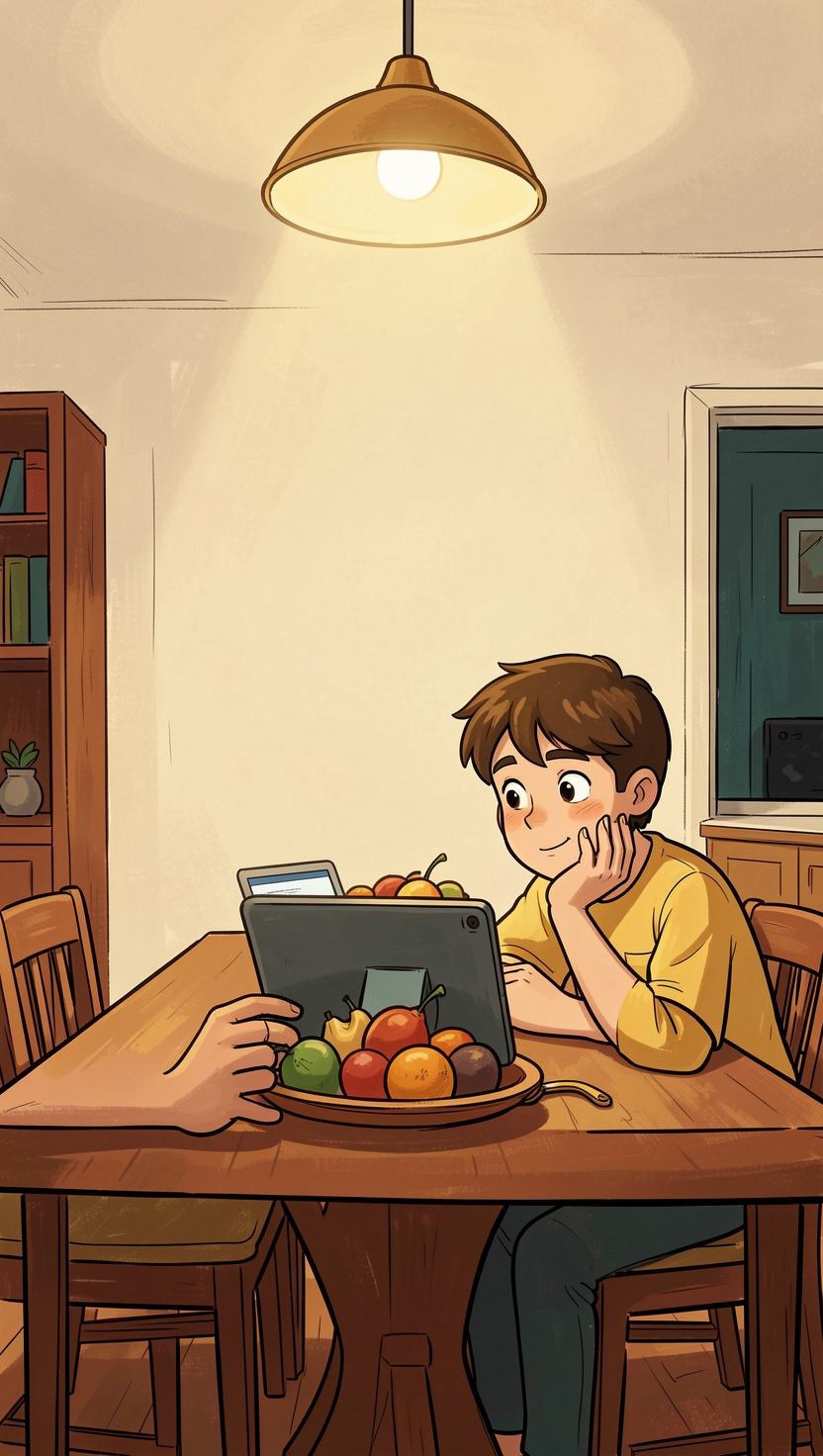
Ask a nine year old to play the computer at chess and watch what happens. Three minutes, a queen dropped for nothing, a lost position, the app closed. The machine was not being unkind. It was being a machine, at full strength, against a child who has owned a chess set for a fortnight.
This is a solved problem, and hardly anybody knows it is solved. There is now a family of chess engines built to play badly in a specific, useful way: badly like a person of a particular strength. They are free, they are fun, and for a child they are far better company than the monster that never blunders.
Chess is on the timetable now, at least in Tamil Nadu
The timing is good, because chess in India is having a decade. On 12 December 2024 in Singapore, Gukesh Dommaraju beat the defending champion Ding Liren by 7.5 points to 6.5 to become, at 18, the youngest world chess champion, and the second Indian to hold the title after Viswanathan Anand, as Al Jazeera reported at the time.
What followed is more interesting than the trophy. In the Tamil Nadu budget for 2025-26, delivered on 14 March 2025, Finance Minister Thangam Thenarasu said the physical education curriculum would be amended to bring chess into the school curriculum. In January 2026 the FIDE Chess in Education commission ran a three day teacher training course at Madras Christian College in Chennai, from 22 to 24 January. Fifty four people completed it and 34 earned the FIDE School Instructor title. FIDE’s own account says the course was aimed largely at teachers from the Tribal Welfare Department, with the goal of reaching nearly 27,000 tribal children across the state, and that Tamil and English editions of the course book were presented so the curriculum would work in the classroom language.
That sits inside a bigger push. FIDE and the International School Chess Federation signed a Memorandum of Cooperation in Astana on 20 October 2025 declaring 2026 the Year of Chess in Education. “Education is the foundation for a good and successful life, and chess is a proven and powerful tool to underpin that goal,” FIDE president Arkady Dvorkovich said.
Online, the shift is already visible. Chess.com’s own country data, dated June 2026, puts the United States and India together at 84 million members, roughly a third of the entire site.
The strongest engine is the worst opponent
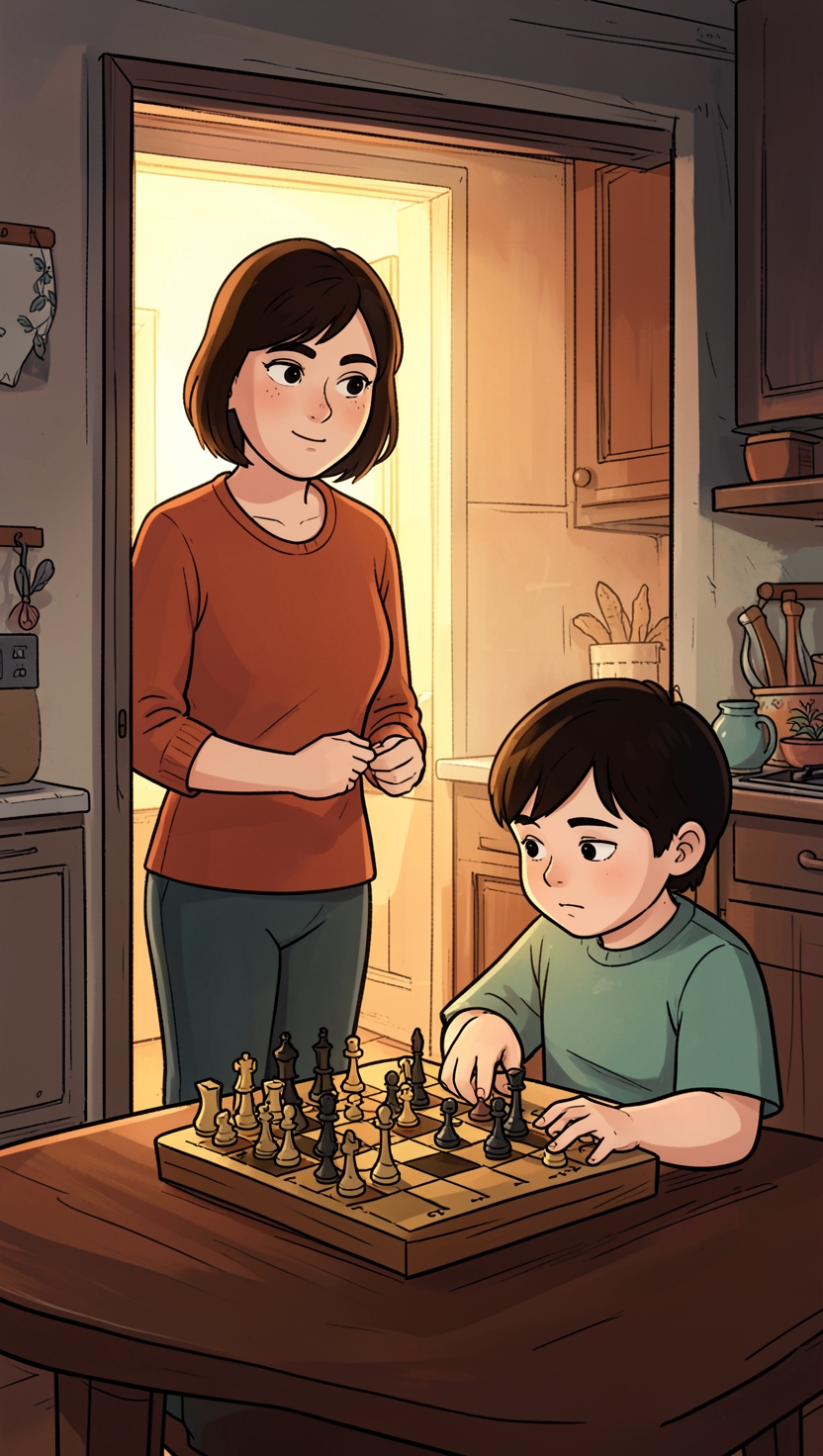
Here is the part that gets skipped. For years, the way to give a beginner a winnable game was to take a superhuman engine and turn it down. Microsoft Research, writing in November 2020 about a project run with Cornell and the University of Toronto, put the problem bluntly: “getting crushed like a bug every single game isn’t that fun, so the most popular attempts at engines that match human play have been some kind of attenuated version of a strong chess engine.” Those weakened engines, the researchers found, matched the moves a human would actually play only 35 to 40 per cent of the time, and did not separate skill levels well.
Anyone who has watched a child play a low difficulty setting knows the feeling without the statistics. The bot plays four strong moves and then hangs a rook for no reason. It does not lose the way a person loses.
So the team built Maia, which learns from human games rather than from playing itself. Each version was trained on around 12 million games from players in one rating band, between 1100 and 1900. Lichess, writing in January 2021 when the bots went live, reported that Maia predicts the exact move a human will play up to 53 per cent of the time, against roughly 43 per cent for Leela and 38 per cent for Stockfish. Three of them sit on Lichess as free opponents: maia1 trained at 1100, maia5 at 1500, maia9 at 1900. The 1100 bot alone has now played more than three and a half million games.
A sparring partner, not an oracle
The point of a human-shaped opponent is not only that losing to it hurts less. It is that its mistakes are legible. Lichess described the ambition this way: “Maia could look at your games and tell you which blunders were predictable, and which were more random mistakes.” A child can learn from a predictable blunder. A random one teaches nothing.
The research has kept moving. Maia-2, presented at NeurIPS in 2024 by a team including Zhenwei Tang, Reid McIlroy-Young, Jon Kleinberg, Siddhartha Sen and Ashton Anderson, replaces the separate model per rating band with a single model using what the authors call a skill-aware attention mechanism, so one system can follow a player as they improve instead of handing them off between nine strangers.
For a parent, the practical version is short. Pick the opponent closest to your child’s actual strength, not the hardest one the app offers. Let them play one notch above now and then, for the stretch. And treat “I want one more game” as the measure that matters, because it is the only one that keeps the board out.
The thing the evidence does not promise
We should be honest about the claim school chess programmes often make for themselves. The Education Endowment Foundation ran a randomised trial in England, published in July 2016, covering 100 schools across 11 local authorities and 4,009 Year 5 pupils who received 30 hours of chess lessons. Its finding: “There is no evidence that the intervention had a positive impact on mathematics attainment for the children in the trial.” Reading and science, the same. Children eligible for free school meals, the same.
But read the other number in that report. Half the pupils said they liked the chess lessons a lot, and only 8 per cent said they did not. Thirty hours of a hard, quiet, entirely screen-free game that most of them enjoyed. If that has to be converted into a maths score before it counts, the accounting is the thing that is wrong.
(We build AI mentors for children, so we have a commercial interest in the general idea that AI helps kids learn. It seemed worth saying on a piece that argues for the weakest bot in the list.)
The bot that plays like a kid is not a lesser product. It gives a child something the superhuman version never can: a game they might win, against something that thinks a bit like they do.
Was this useful?
Sources
- India's Gukesh beats China's Ding to become youngest chess world champion · Al Jazeera
- Tamil Nadu Budget 2025-26: Chess To Become School Curriculum · ETV Bharat
- Empowering teachers, inspiring students: FIDE Chess in Education at Madras Christian College · International Chess Federation (FIDE)
- FIDE and ISCF declare 2026 as the Year of Chess in Education · International Chess Federation (FIDE)
- The human side of AI for chess · Microsoft Research
- Introducing Maia, a human-like neural network chess engine · Lichess
- maia1 (bot profile and games played) · Lichess
- Maia-2: A Unified Model for Human-AI Alignment in Chess · arXiv (NeurIPS 2024)
- Chess in Schools: Evaluation Report and Executive Summary · Education Endowment Foundation
- World Map of Chess.com Players · Chess.com