India's kids are making things with AI, not just asking it
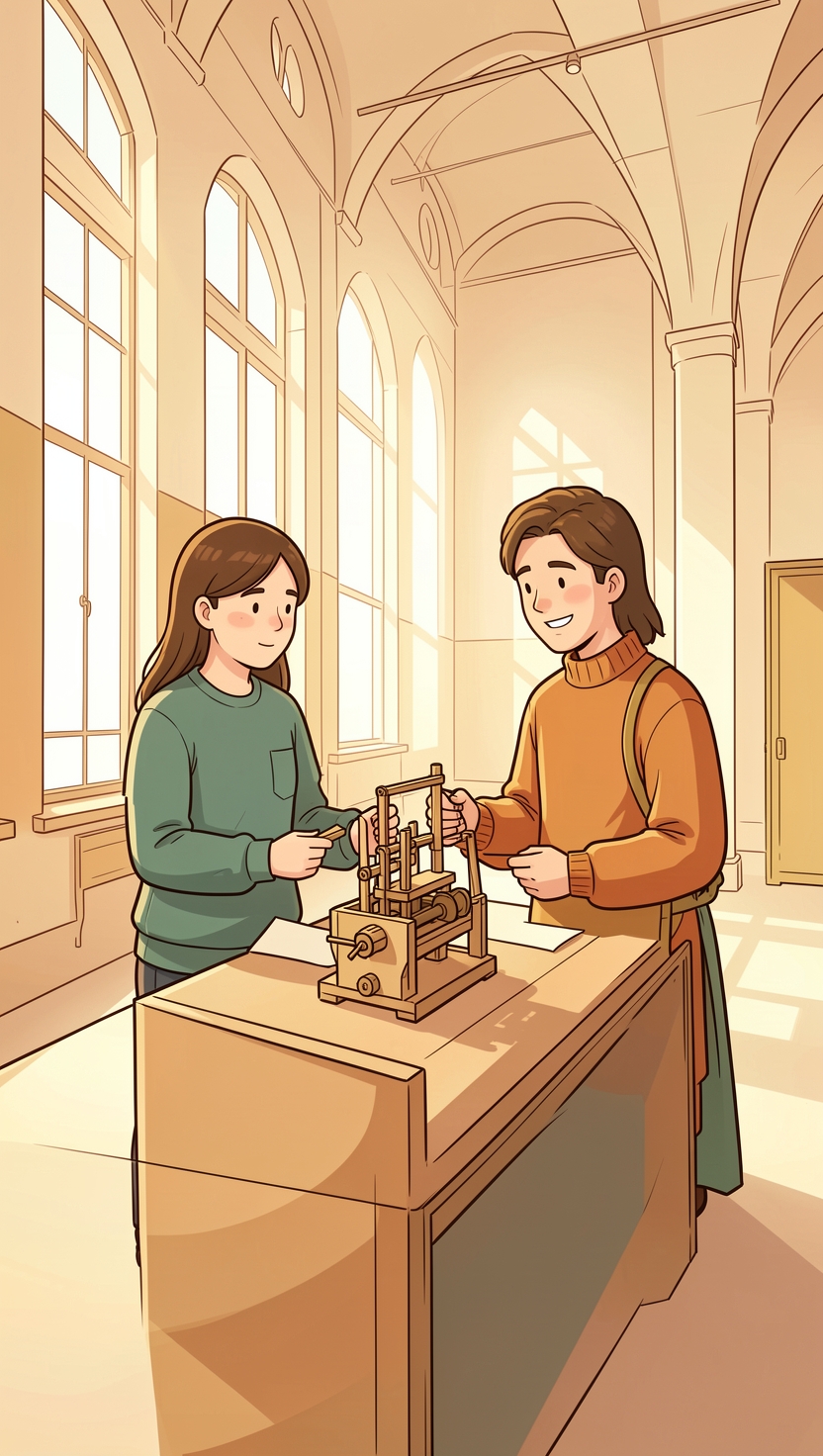
There is a moment most parents will recognise. Your child has a question, types it into a chatbot, reads the answer, closes the tab. Fine. Harmless. Slightly flat.
Now watch a child who is trying to build something with the same tool. They argue with it. They get cross. They go away, come back, and then drag you over by the sleeve to show you the one bit that finally worked. Same technology, completely different kid.
In February, India put a few hundred of the second kind on a stage.
A youth challenge that ran like a science fair with a budget
At the India AI Impact Summit in New Delhi, the government announced the winners of the YUVAi Global Youth Challenge, run under the IndiaAI Mission by the Ministry of Electronics and Information Technology with MyBharat and NIELIT as implementation partners. Entry was open to anyone aged 13 to 21, from any country, working alone or in a pair. DD News reported more than 2,500 applications from 38 countries, with the top 70 teams bringing working prototypes to the summit.
What they built is the part worth reading twice. First prizes of 15 lakh rupees each went to a project on speech clarity, one on forest fire early warning, and one on smart traffic management. Second prizes went to cervical cancer screening, a Braille learning tool, and detection of dysarthria, the speech difficulty that follows a stroke or a brain injury. Everyone who built those things was 21 or younger on the day of the summit. Several were school age.
The official challenge page is worth a look if you have a child who might fancy this in a few years. The themes were concrete rather than grand: elderly care, mental health, education access, disability support, agriculture, transport, smart cities, plus an open wild card track for anything that did not fit. Shortlisted applicants were given ten days of virtual bootcamps and workshops with mentors. And every entry had to include a video demo of two to three minutes, in which the young person introduces the problem, shows the thing working, explains the technology, and says what they would do next.
That last requirement is doing far more work than it looks like.
Free tools, and somewhere to use them
Same summit, different announcement. Adobe said students at accredited higher education institutions across India will get Photoshop, Acrobat Pro and Firefly free, and that its AI tools and learning resources will be available at no cost to 15,000 schools and 500 colleges fitted with Content Creator Labs. Shantanu Narayen, Adobe’s chair and chief executive, said the company is “expanding the opportunity for creativity for millions of students across India”. Adobe tied the whole thing to India’s target of two million jobs in animation, visual effects, gaming and comics by 2030, which tells you the commercial logic, and that is fine. The tools are still free.
The nicer detail is buried further down that release. Adobe also premiered five short AI films based on Indian folklore, made with the Ministry of Information and Broadcasting, under the name Kathāvatār.
Our view: those films matter less as films than as a brief. Take a story your grandmother told you and make three minutes of it. That is a thing a twelve-year-old can genuinely attempt on a Saturday now, and could not have attempted at all two years ago. It is also a story that belongs to them in a way that a generic prompt never will.
The fun is in the audience, not the tool
Here is the thread running through all of it, and it is not really about AI.
A child asking a chatbot has no deadline, no viewer, and no reason to finish. A child making a two-minute demo video has all three. The video is not paperwork bolted onto the competition. It is the competition, in the sense that a child who can stand in front of a camera and explain what their thing does, why it broke, and what they would fix next has understood the technology in a way no quiz will detect.
We build AI mentors for children, so treat that as an interested party talking. But it is also just how making has always worked, from the school play to the science fair. The tool got cheaper. The need for someone to show it to did not change at all.
What a parent here can borrow
You do not need a national mission to copy this. Singapore already has a small version: IMDA and the Ministry of Education added “AI for Fun” modules to the Code for Fun programme from 2025, elective blocks of five to ten hours offered to all primary and secondary schools, built around tinkering rather than theory. Children design prototypes and train smart robots to respond to external signals. Worth asking your child’s school whether they run it, because plenty of parents have never heard the name.
For everyone else, the weekend version is smaller still. Give your child a brief, not a subscription. One story, one problem in the house, one animal they like. Then ask for the two minutes to camera at the end: what it is, how it works, what went wrong. Keep the video. In three years it will be the most interesting thing on your phone.
We have written before about India making AI compulsory from Class 3 and about what children actually build when nobody sets the task. The curriculum is the floor. The making is the point.
Was this useful?
Sources
- India AI Impact Summit 2026 showcases youth-led AI innovation for public good · DD News
- YUVAi Global Youth Challenge · IndiaAI Mission, Ministry of Electronics and Information Technology
- Adobe introduces Photoshop, Acrobat and Firefly AI student offering for free in India · Adobe
- New "AI for Fun" Modules for Students · Ministry of Digital Development and Information, Singapore
- India AI Summit Crowns Global Youth Heroes: Scalable Solutions in Health, Agri and Accessibility · NE India Broadcast