Minecraft added an age check. It is aimed at the adults
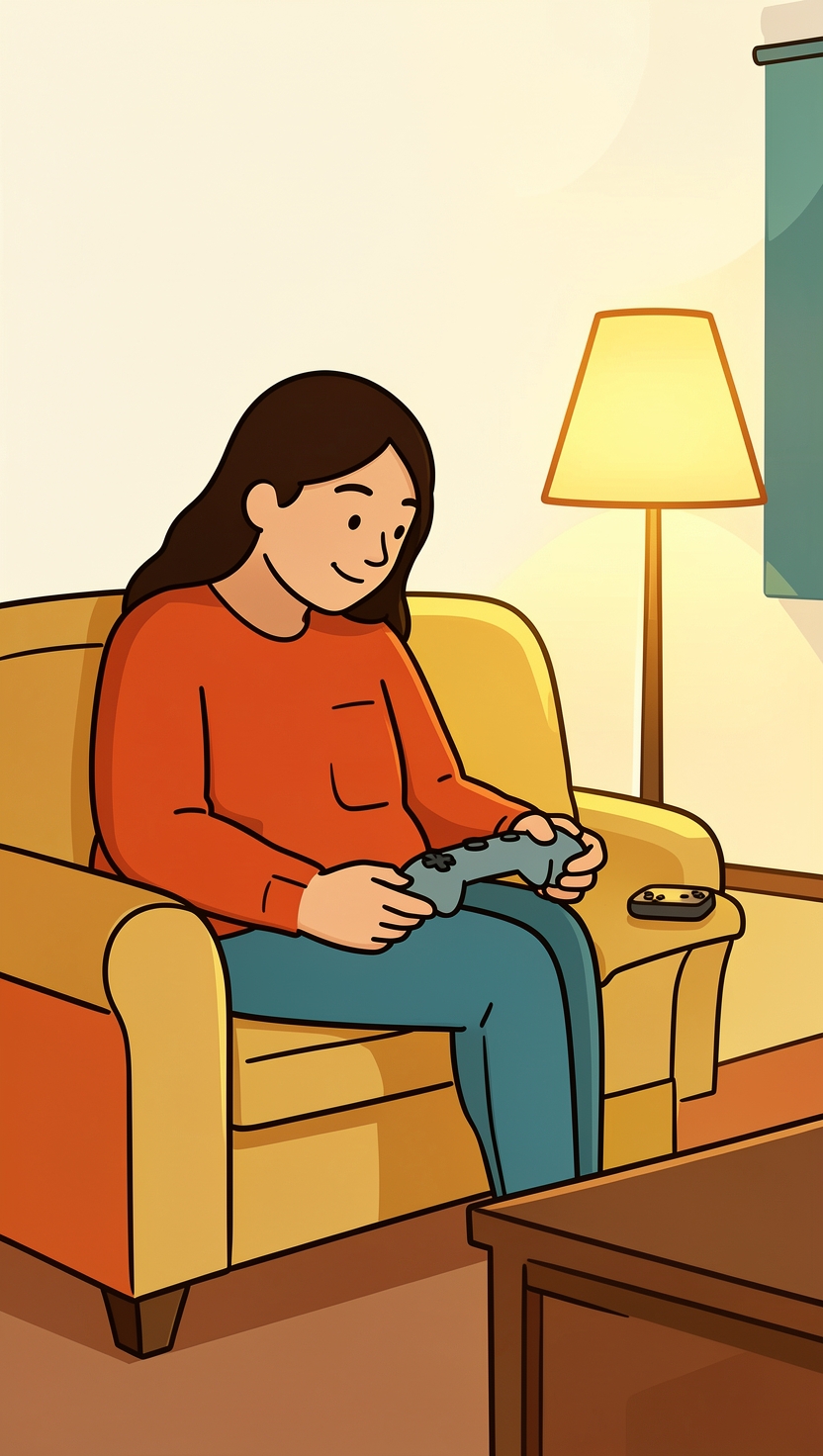
Type a message on a Minecraft server in Britain this year and you might get nothing back except a line where the conversation used to be: chat is not allowed by account settings. PCGamesN reported in June that the restriction had come into full effect, and that some players on PC had gone looking for mods to get around it rather than comply.
Here is the part that surprises parents. The lock is not pointed at children. It is pointed at the grown ups.
Prove you are eighteen, or play quietly
Microsoft announced the plan on Xbox Wire in July 2025. Players in the UK whose accounts say they are 18 or over would be asked to verify it, and from early 2026 that verification would be required to keep full access to social features, which Microsoft lists as voice and text communication and game invites. Skip it and your social reach shrinks to your friends list. Nothing else changes: you can still buy games, still play them, still keep your achievements.
Minecraft joined that programme in February 2026, using the identity firm Yoti to run the checks, as NME and Biometric Update both reported at the time. Microsoft framed it as compliance with the UK Online Safety Act. Its own February 2026 transparency post puts the direction plainly: the system was “introduced in the UK and expanding to more regions later this year.”
There are four ways to satisfy it, according to Xbox: a government issued ID, an age estimate from a face, a mobile provider check, or a credit card check. Microsoft says the information a player hands over “is protected with industry-standard encryption and is not stored or used for any other purpose.”

Read the logic backwards and it makes sense. A platform cannot ask nine year olds to prove they are nine. What it can do is find the adults, confirm them, and treat everyone it cannot confirm as a possible child. Roblox went at the same problem from the other end, making a face scan the price of chatting. Minecraft is doing the quieter version: no proof, no strangers.
The bit that decides which pile your child lands in
All of this only works if the account tells the truth. And in the same July 2025 post, Microsoft gives the family answer directly. It encourages parents of children and teens to set up “child or teen accounts, which do not require age verification”, the ones that hang off a family group with screen time, spending and content settings attached.
Which brings us to the birthday nobody wants to talk about. Plenty of Minecraft accounts belonging to primary school children were set up years ago by a parent in a hurry, with an adult birth year typed in to skip the consent steps. That shortcut has now hardened into an identity. The account does not look like a child’s account to any of this machinery, so none of the child protections attach to it, and the check that eventually arrives is the adult one.
In August 2026 it got a little stranger. UNILAD Tech and other gaming outlets reported that Xbox had begun quietly marking some long standing accounts as verified without any check at all, on the strength of account history alone, with a message telling players they were “no longer required to complete full age verification for uninterrupted access to social features on Xbox.” Microsoft has not published which signals feed that judgement, so treat the detail as reported rather than documented. The shape of it is clear enough though: an account old enough to look like an adult’s can be waved through by inference. If a child is the one holding it, the inference is wrong in the direction that matters.
None of this is switched on here yet
A Singapore parent reading the above should know that today it changes nothing in their living room. The checks are UK led, and Singapore’s own work has started with social media rather than games. MDDI said on 4 July 2026 that it would extend age assurance requirements to designated social media services and require them to keep users under 13 off those services. Asked in Parliament on 6 May 2026 about age based restrictions on gaming platforms, the ministry said it would “consider similar safeguards for online gaming.” Considering is not requiring. Games are on the list, not in the rules.
So the gate on the door is somebody else’s for now. The room behind it is still ours.
The question worth asking tonight
The most useful Singapore numbers here are a few years old, from an MCI survey of 810 youths aged 10 to 18 and their parents run between October 2022 and February 2023, so read them as a picture of that moment rather than of today. About half of those young people, 47%, gamed every day. Around a third, 36%, played games with strangers sometimes or frequently. Only 31% of parents were fully aware of who their child gamed with, and one in four were not aware at all. Among the 13 to 18 year olds, 17% had experienced in game bullying. Of those, 8% spoke to their parents about it.
That last figure is the one to sit with. Not because gaming is dangerous, but because the reporting line home is thin, and no age check anywhere fixes a thin reporting line. MDDI’s Digital Parenting Survey of 1,986 parents in February 2025 found 57% worried about their children interacting with strangers online, while only 37% felt confident guiding their child’s digital habits. Almost nine in ten were already taking at least one action.
The machines are doing more of the work inside the game than most parents realise. Xbox says its proactive AI moderation now covers 11 additional harmful topics, and reports “a 90% drop in spam message complaints compared to 2024, and an overall 23% drop in complaints for messages from non-friends.” Useful, and completely invisible to your child. It is also no substitute for the two minutes it takes to ask who they built that base with, and whether they know that person from school.
If you do one thing this week, make it the account type rather than the settings menu. A child or teen account under a family group is the difference between a system that knows a child is present and a system that has been told an adult is. Everything else, including the age numbers the platforms advertise, follows from that one field being right.
Was this useful?
Sources
- Age Verification in the UK and Xbox's Ongoing Commitment to Player Safety · Xbox Wire, Microsoft
- Safer Internet Day 2026: Xbox Transparency Report and Tools to Support Player Safety · Xbox Wire, Microsoft
- 'Minecraft' to add controversial age verification · NME
- Minecraft players using mods to bypass Xbox age restrictions · PCGamesN
- Microsoft reveals 'longstanding' Xbox accounts will bypass new age verification · UNILAD Tech
- MCI's Survey Suggests Low Awareness among Parents on Child's Online Gaming Activities · Ministry of Digital Development and Information, Singapore
- MDDI Study Shows Most Parents Guide Children's Digital Use But Would Like More Support · Ministry of Digital Development and Information, Singapore
- MDDI's Response to PQ on Age-based Restrictions for Addictive Design Features on Social Media and Gaming Platforms · Ministry of Digital Development and Information, Singapore
- Singapore's Next Steps in Building Child-Safe Digital Environments · Ministry of Digital Development and Information, Singapore
- Age verification expands in gaming: Minecraft selects Yoti, Discord tests Persona · Biometric Update