Roblox Build lets kids make a game by typing one line
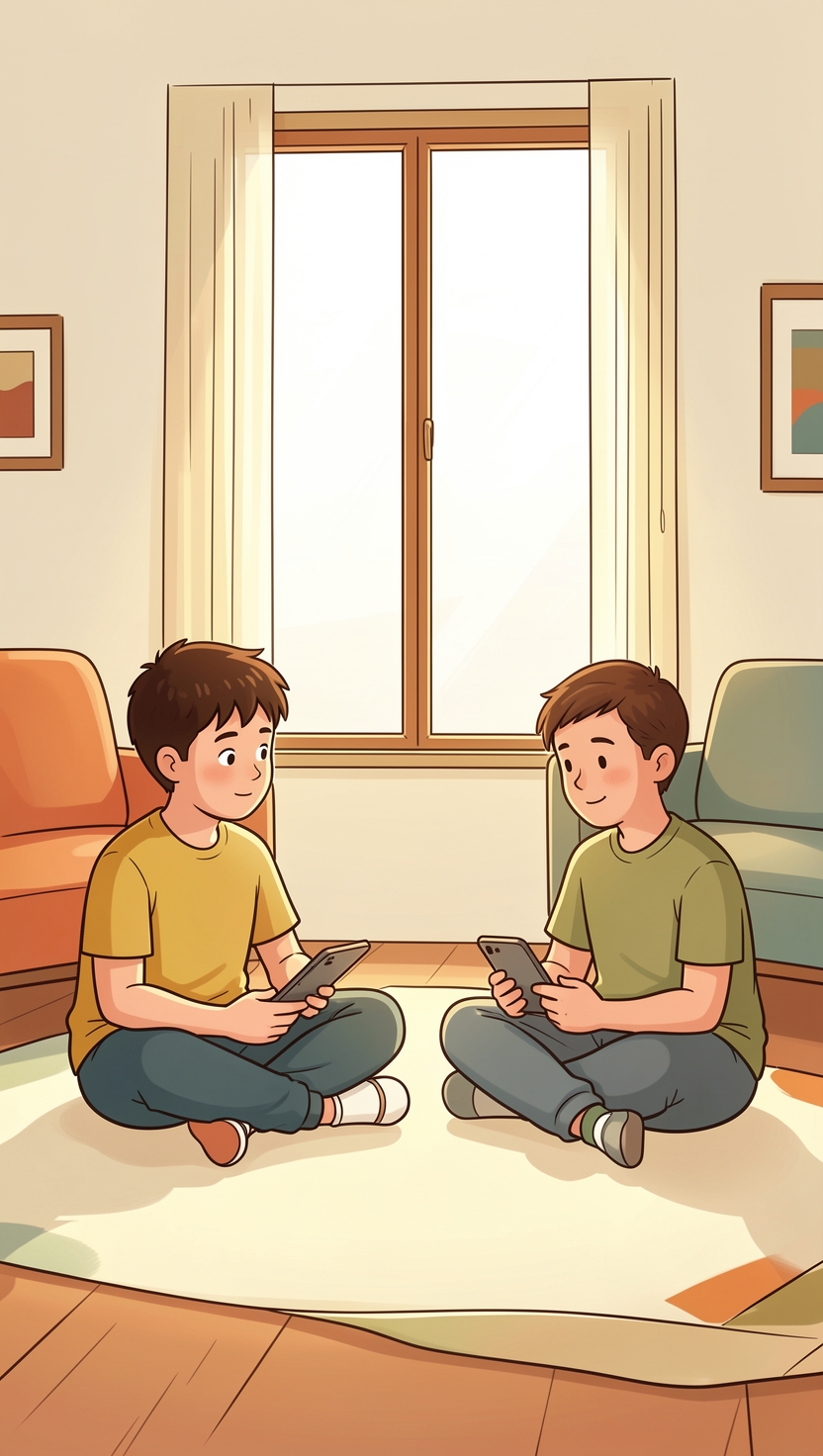
Somewhere in New Zealand last month, a nine year old opened Roblox on a phone, tapped a new tab, and typed something close to this: “Let’s make a cozy adventure game set in a dense forest.” A minute or so later there was a forest to walk around in. No desktop computer, no Roblox Studio, no code, no older sibling doing the hard part.
That is the actual thing Roblox shipped on 28 July, and it is worth a parent’s attention for reasons that have very little to do with the demo.
What Roblox actually launched, and where
Roblox announced Build on 16 July: a mobile first creation tab inside the ordinary Roblox app that turns a text prompt into a basic playable game. In its own press release the company says Build handles gameplay mechanics, environment, characters, visual style and sound, powered by a mix of open source models and Roblox’s own models trained on its 3D and gaming data. A base tier is free. There are paid tiers for heavy users.
The public alpha opened on 28 July in one country only: New Zealand, for age checked users aged nine and up. TechCrunch reported that within that test group, only those aged 16 and over will be able to publish a game to a global audience, and Roblox says Build games face the same extended review as anything else before they reach its catalogues. In its second quarter shareholder letter, Roblox told investors that Build “will bring prompt-based game creation to over 120 million DAUs directly in the Roblox mobile app”, with a wider rollout over the coming months.
Note the order of countries. New Zealand went first, ahead of the United States, which means the rest of this region is nearer the front of the queue than usual. If your child plays Roblox, this is a change that is coming to their phone, not to a conference stage.
The first prompt is the least interesting part
Here is our view, clearly labelled as ours. Typing a sentence and receiving a forest is a party trick. It is a lovely one, and for a child who has never got past the blank screen of a real game engine it may be the thing that starts everything. But it is minute one. What happens in minute two is the whole story.
Does the child open the forest, walk around, and decide it needs a river? Then decide the river needs a reason? Then discover that their friend gets lost in it and add a signpost? That sequence is design, and it is the part no model does for them.
Roblox seems to know the difference, at least commercially. The company said its discovery systems highlight games with long term retention, “which doesn’t include AI slop”, and that if nobody plays a game, nobody can find it. Its shareholder letter says the Recommended For You algorithm was updated in April to optimise for long term player retention. Generation is cheap now. Roblox says creators are already producing over 60,000 3D assets a day, with nearly 1,400 games using content from its Cube model daily. Attention is not cheap, and never was.
Australia is teaching the same skill on purpose
There is a tidier version of this happening in classrooms across the Tasman. Minecraft Education’s Hour of AI lesson, The First Night, has students program an AI agent to craft tools and build shelter before dusk, using MakeCode blocks or Python. Day of AI Australia, which runs it locally, says access is free for most Australian teachers, and describes the point plainly: students learn “why AI systems need human oversight” and practise training and verifying what the AI produces.
That is the same shape as Build on a good day. Say what you want. Look hard at what you got. Fix the gap. A child who can do that with a Minecraft agent is learning something more durable than a child who has generated forty forests and played none of them.
The part we are not going to skip
Build requires an age check, which on Roblox means the facial age estimation flow we wrote about earlier this month in our piece on the Roblox face scan. And the platform’s child safety record in this region is under genuine pressure right now. In August, Australia’s eSafety Commissioner accepted a court enforceable undertaking from Roblox, reported by The Conversation and by Biometric Update, covering commitments to stop adults contacting unknown children without parental consent, to make children’s accounts private by default, to improve reporting tools, and to bring in an independent auditor to test its safety measures, including its age assurance. Roblox has about three months to put those changes in place.
Being pleased about a creative tool and wary about the platform carrying it are not in conflict. Both are true this month.
Three questions worth more than a parental control
When your child shows you a game they made this way, try these, in this order. Can I play it? What did you change after the first version? Show me the bit the AI got wrong.
If the answer to the second question is “nothing, it just made it”, you have watched a generated game, not a made one. That is not a reason to be sniffy about it. It is an opening: ask what they would change if they could change one thing, then hand the phone back.
The typing was never the hard part. Deciding the forest needs a river, and then deciding why, still is.
Was this useful?
Sources
- Roblox Second Quarter 2026 Shareholder Letter · Roblox Corporation
- Roblox Introduces Build: A New Way to Create on the Platform (16 July 2026) · Roblox press release, via Yahoo Finance
- Roblox launches an AI-powered game-creation feature in its mobile app · TechCrunch
- Minecraft Education's Hour of AI · Day of AI Australia
- Roblox has been put on notice yet again over child safety concerns. What do parents need to know? · The Conversation
- Roblox makes enforceable promise to address remaining online safety concerns · Biometric Update