Why Singapore's school AI listens to kids instead of answering
The oral exam is rarely the hard part. The practice is.
Ask around almost any dining table here in the fortnight before an oral component and you will find a version of the same scene. A child reads a passage aloud in Mandarin, Malay or Tamil. A parent listens with one ear while clearing dinner, corrects a tone, and gets a wounded look back. The parent’s own mother tongue is rustier than they would like to admit, so the correction comes out sharper than intended. Ten minutes in, both sides quit.
That is not a discipline problem. It is a supply problem. Learning to speak a language needs a large number of low stakes repetitions in front of someone patient, and most households simply do not have one on hand.
Most primary pupils here are learning their mother tongue as a second language
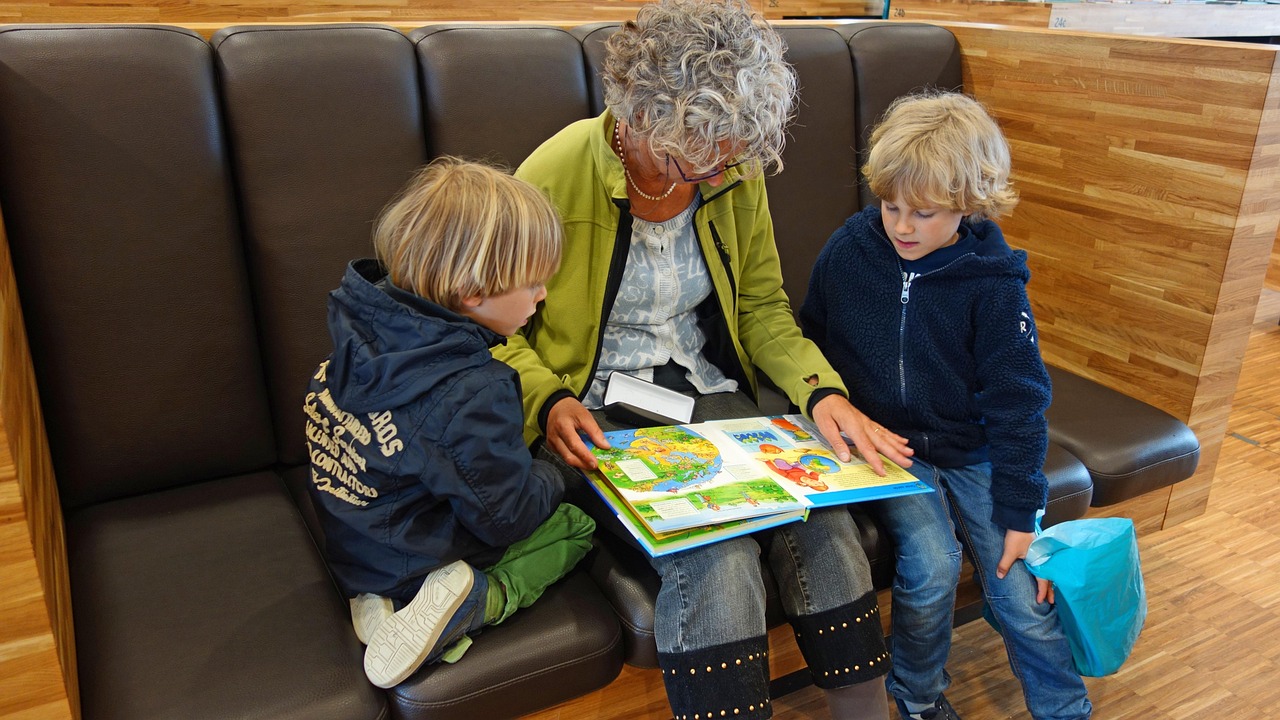
The 2020 Census puts a number on what every language teacher already knows. Among Chinese resident students attending primary school, roughly 129,960 spoke English most frequently at home, compared with about 35,744 who spoke Mandarin. Whatever the language on the timetable says, for the large majority of these children it functions as a second language, learned mostly at school and practised almost nowhere else.
Which makes the oral component quietly brutal. A child can memorise vocabulary alone at a desk. Nobody learns to speak alone at a desk.
What MOE actually built is not a chatbot
The AI in Singapore’s national school platform is unglamorous, and that is the interesting bit. The Student Learning Space runs a set of AI features that MOE describes plainly on its own site: an Adaptive Learning System for upper primary and lower secondary Mathematics, feedback assistants that draft comments for teachers to review, a Learning Assistant that MOE says will not provide spoon-fed answers, and a Speech Evaluation Tool.
The Speech Evaluation Tool is the one worth a parent’s attention. MOE’s description is that it “provides instant, automated feedback on pronunciation, reading fluency, and speech clarity to help students improve their speaking abilities for English and Mother Tongue Languages”, across all levels. In practice a child records an audio response, and gets back a transcript with the mispronunciations, insertions and omissions marked, plus an accuracy score, a fluency score and a words-correct-per-minute figure. They can then re-record. The error annotation currently covers English, Chinese and Tamil, with Malay noted as coming.
Note what it does not do. It does not write the child’s essay, answer the comprehension question or hold a conversation. It listens, marks what went wrong, and lets the child try again without an audience. MOE frames its whole AI approach around building in guardrails and keeping cognitive offloading down, and a tool that grades your speaking rather than doing your thinking is about as clean an example of that as you will find.
The evidence is encouraging, with one honest gap
Does automated speech feedback actually work? The best controlled evidence we could find is a 2023 study in Frontiers in Psychology by Weina Sun, which ran a 14 week course with 61 intermediate learners of English. One group practised with speech recognition technology and peer correction, the other had traditional teacher-led instruction. The technology group improved significantly more on comprehensibility, on accentedness, on spontaneous speech and on overall speaking ability. One learner in the study said practising this way felt less nervous than speaking in front of the teacher, and meant more chances to practise without feeling self-conscious. Any shy eleven-year-old would recognise the sentiment.
The gap: those participants were adults, aged 20 to 31. Extending that result to a Primary 4 child learning Tamil is a reasonable bet, not a proven finding. Anyone telling you the research on AI speech tools for children is settled is overselling it.
Tamil and Malay are the harder engineering problem
There is also a local wrinkle worth knowing. Speech technology leans on large amounts of recorded data, and researchers classify Tamil and Malay as low-resource languages for exactly this reason. Assessing children’s spoken fluency is well researched for majority languages and, in the words of one recent study, remains highly challenging for low-resource ones.
That study is a local one. A 2025 paper from a team including Nanyang Technological University’s College of Computing and Data Science built a system to score children’s speaking fluency in Tamil and Malay by combining a fine-tuned multilingual recogniser with objective measures such as speech rate and pause ratio, then having a language model interpret them. They report significantly higher accuracy than the alternatives they tested, including feeding the audio straight to a general-purpose model. It is early work, but it is being done on our languages and our children’s voices rather than borrowed from somewhere else.
What this changes at your dining table
Two practical things.
Ask your child’s mother tongue teacher whether oral practice is being set through the Speech Evaluation Tool, because it is teacher-assigned rather than something a parent switches on. If it is, ask what the fluency scores are showing across the term. That is a far better conversation than “how was the oral practice”.
And borrow the mechanism even if the tool is not in play. Have your child record themselves reading a short passage on any phone, then listen back together. The recording does the correcting. Children hear their own hesitations perfectly well when the voice is coming out of a speaker instead of their own head, and the parent gets to move from corrector to audience, which is a much better role to have.
The useful frame is not whether AI can teach your child a language. It is that a machine will listen to the same paragraph nineteen times without sighing, and you will not.
Disclosure: Mentus AI builds AI mentors for children, so we have a commercial interest in this area. The tools described here are MOE’s, not ours.
Was this useful?
Sources
- Artificial intelligence in education · Ministry of Education, Singapore
- AI-enabled Features in the Singapore Student Learning Space · Ministry of Education, Singapore
- Speech Evaluation Tool (teacher user guide) · Ministry of Education, Singapore
- Resident Students Aged 5 Years and Over by Language Most / Second Most Frequently Spoken at Home, Level of Education Attending and Ethnic Group (Chinese), Census of Population 2020 · Singapore Department of Statistics
- The impact of automatic speech recognition technology on second language pronunciation and speaking skills of EFL learners: a mixed methods investigation · Frontiers in Psychology
- Automated evaluation of children's speech fluency for low-resource languages · arXiv (Nanyang Technological University and collaborators)