Singapore's teens use AI the most. They also top world rankings
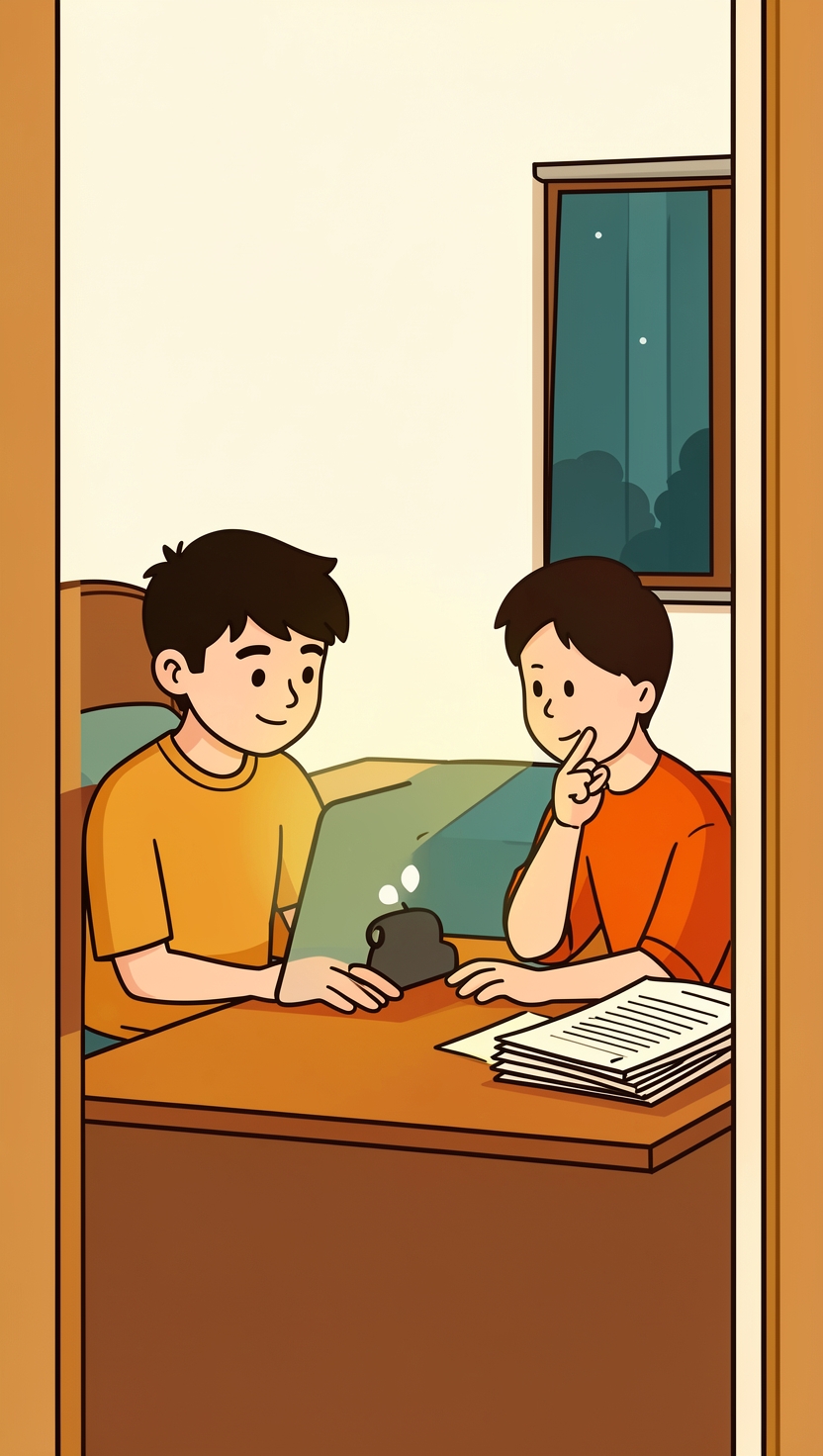
Ask a Singapore parent what worries them about their child and a chatbot, and most will say the same thing: too much, too soon. The PISA 2025 results, released on 8 September, make that instinct harder to hold onto. Singapore’s 15-year-olds turned out to be among the heaviest AI chatbot users anywhere in the world tested, and also among its very best performers.
So which is it? Is the AI helping, or is Singapore simply strong enough to absorb it? The honest answer sits inside the same report, and it is more specific than either story.
The scores, first
Singapore’s students came first in the world in reading, with an average score of 535, ahead of every other system tested. In mathematics they scored 563, in science 560, and in the newly added computational problem-solving domain 563, each of those second only to B-S-J-Z, the Beijing-Shanghai-Jiangsu-Zhejiang region of China (Ministry of Education, Singapore, and OECD). Fifteen percent of Singapore’s students counted as “academic all-rounders,” meaning they scored at the top level in all three core subjects, against an OECD average of three percent.
Against that, the chatbot numbers look almost alarming. Only four percent of Singapore’s 15-year-olds said they never or almost never use an AI chatbot for schoolwork, compared with fourteen percent across the OECD. Two in three use one at least weekly to help them learn. Forty-six percent use one for research, forty-five for drafting assignments, forty-one for summarising texts, each well above the OECD average for the same tasks (VnExpress International, citing OECD data).

What the global data actually says
Here is where it gets interesting, because the same report found a real relationship between chatbot use and lower science scores, and it did not spare Singapore’s own students from the pattern.
Averaged across every task, OECD’s analysis found that students who never use a chatbot for schoolwork score about twenty points higher in science than students who do. The gap was widest for the most passive uses: students who draft their written assignments with a chatbot almost every day scored 481 in science, against 509 for students who never do, a 28-point difference. Summarising assigned reading showed a similarly steep gap.
One use looked different. Students who turn to a chatbot specifically to “help me learn,” on roughly a weekly basis, scored about the same in science as students who do not use one at all, once family background was accounted for. It was the daily users, and oddly the occasional ones too, who scored lower than that weekly group (TechNode Global; reported separately by NewsBytesApp). OECD’s secretary-general, Mathias Cormann, put the underlying point plainly: AI can strengthen learning only when it is used with purpose, not as a stand-in for a student’s own attention and effort.
None of this proves the chatbot caused the lower score. A child already struggling with an assignment may reach for AI precisely because the task is hard, which would produce the same pattern without the tool being the cause. OECD’s own framing treats the finding as a correlation worth watching, not a verdict.
What it does suggest, task by task, is a line Singapore parents can actually use. Asking a chatbot to explain a concept, then checking the explanation, looks different in this data from asking it to write the paragraph. The first held up. The second did not.
The quieter finding in the same report
Buried further down the same release is a second result that has nothing to do with AI, and arguably deserves more attention than it is getting. The gap between Singapore’s strongest and weakest performers widened between 2022 and 2025, across maths, reading and science alike. Over the same period, the report’s measure of family support for learning at home fell (Ministry of Education, Singapore).
The two findings sit in the same document without being tied together, and nothing in the report claims one caused the other. It would be a stretch to blame the widening gap on chatbots specifically. But a school system that is both the heaviest adopter of a homework tool and showing a widening split between its best and weakest students is worth watching closely, even without a tidy conclusion to draw yet.

What this actually means at home
The useful move here is not to restrict a tool that two-thirds of Singapore’s teenagers already use weekly. It is to ask what they used it for tonight. “Help me understand this” and “write this for me” produced different results in the world’s largest dataset on the question. A fortnight of actually asking that question at the kitchen table will tell a parent more about their own child’s habits than any national average can.
And the part of the report that should worry a Singapore parent most may not be the AI line at all. It is the one about which students are falling further behind, and whether anyone at home still has the time to sit with them while they do.
Was this useful?
Sources
- PISA 2025: Singapore Students Demonstrate Strong Real-World Problem-Solving Skills in Computational Thinking Domain · Ministry of Education, Singapore
- Table A1. Mean scores of participating education systems in PISA 2025 · Ministry of Education, Singapore, and OECD
- One of world's best school systems is among its heaviest AI users, PISA finds · VnExpress International
- OECD Finds Students Who Use AI Chatbots Daily Score Far Worse on Tests · TechNode Global
- PISA 2025: Frequent AI Drafting Tied to Lower Science Scores · NewsBytesApp