Children are taking their worries to the homework chatbot
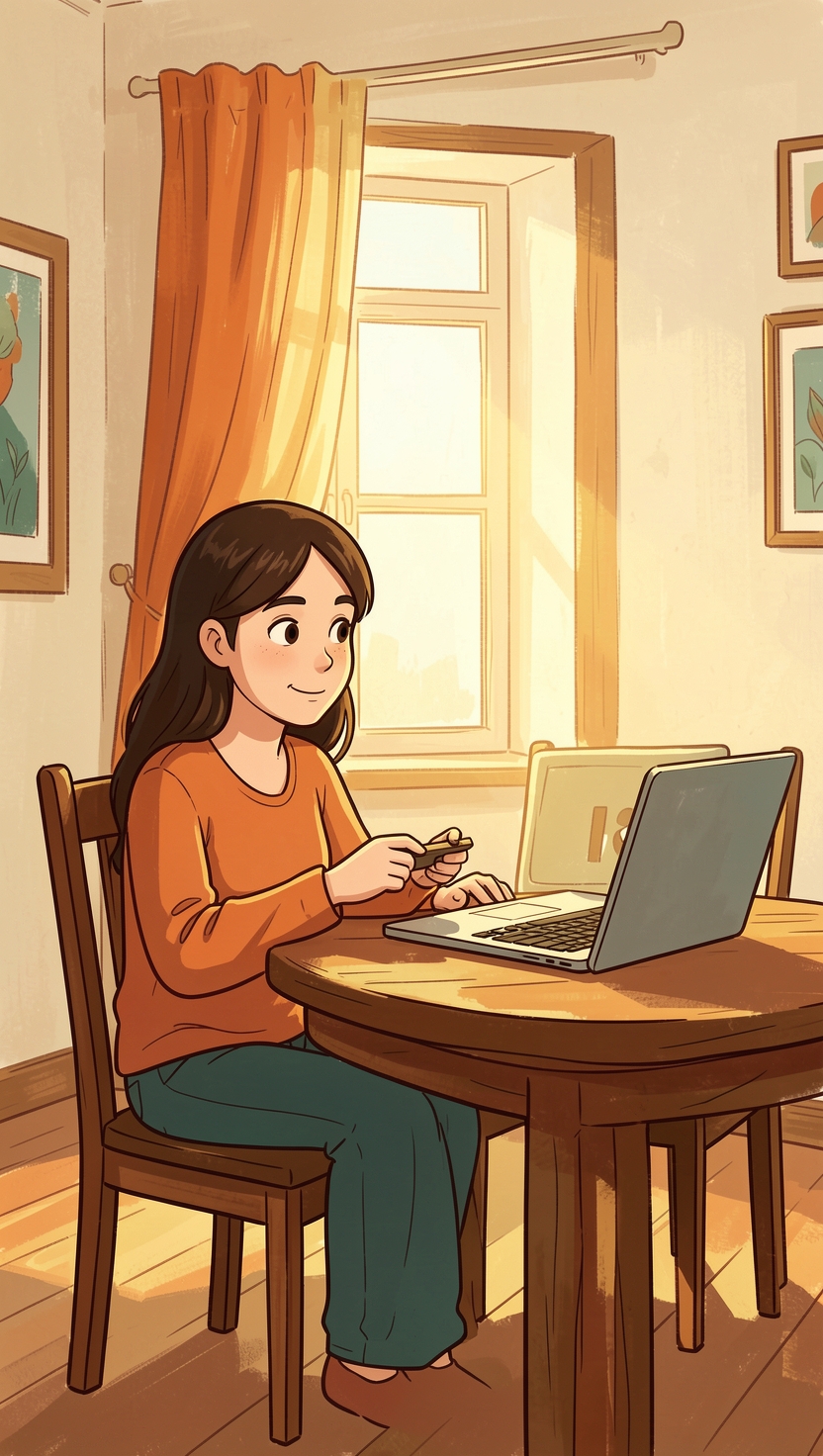
A child opens a chatbot to check a maths answer. Twenty minutes later, in the same conversation, she asks whether it is normal that her best friend has stopped replying to her messages. Nothing on the screen changes. Same tab, same patient tone, same tidy paragraph coming back.
That slide, from schoolwork into personal life inside one tool, is what the newest research in this region has finally managed to measure. It does not match where the rules are pointing.
The biggest regional survey so far
Australia’s eSafety Commissioner surveyed 1,950 children aged 10 to 17 in February and March this year and released the findings this month. Seventy-eight per cent had used an AI assistant, the ordinary kind: ChatGPT, Gemini, Claude. One in five used one every day.
Then comes the part worth sitting with. Of the children using these tools, 54 per cent used them for personal or social reasons. A third had asked for advice about a situation they were in. A third had asked about their physical health. One in five had asked about their mental health or wellbeing. About a third had shared personal or sensitive information with the tool, and one in five reported an interaction they found inappropriate or harmful, including chatbots being mean, saying hateful things about particular groups, or trying to control the user.
AI companions, the products built to be a persona and a relationship, were the much smaller story. eSafety put those at 8 per cent of children, roughly 200,000 across Australia.
So: 8 per cent on the apps the headlines are about, and 54 per cent having personal conversations inside the app that lives on the school laptop.
Japan lands on the same finding, and on the same children
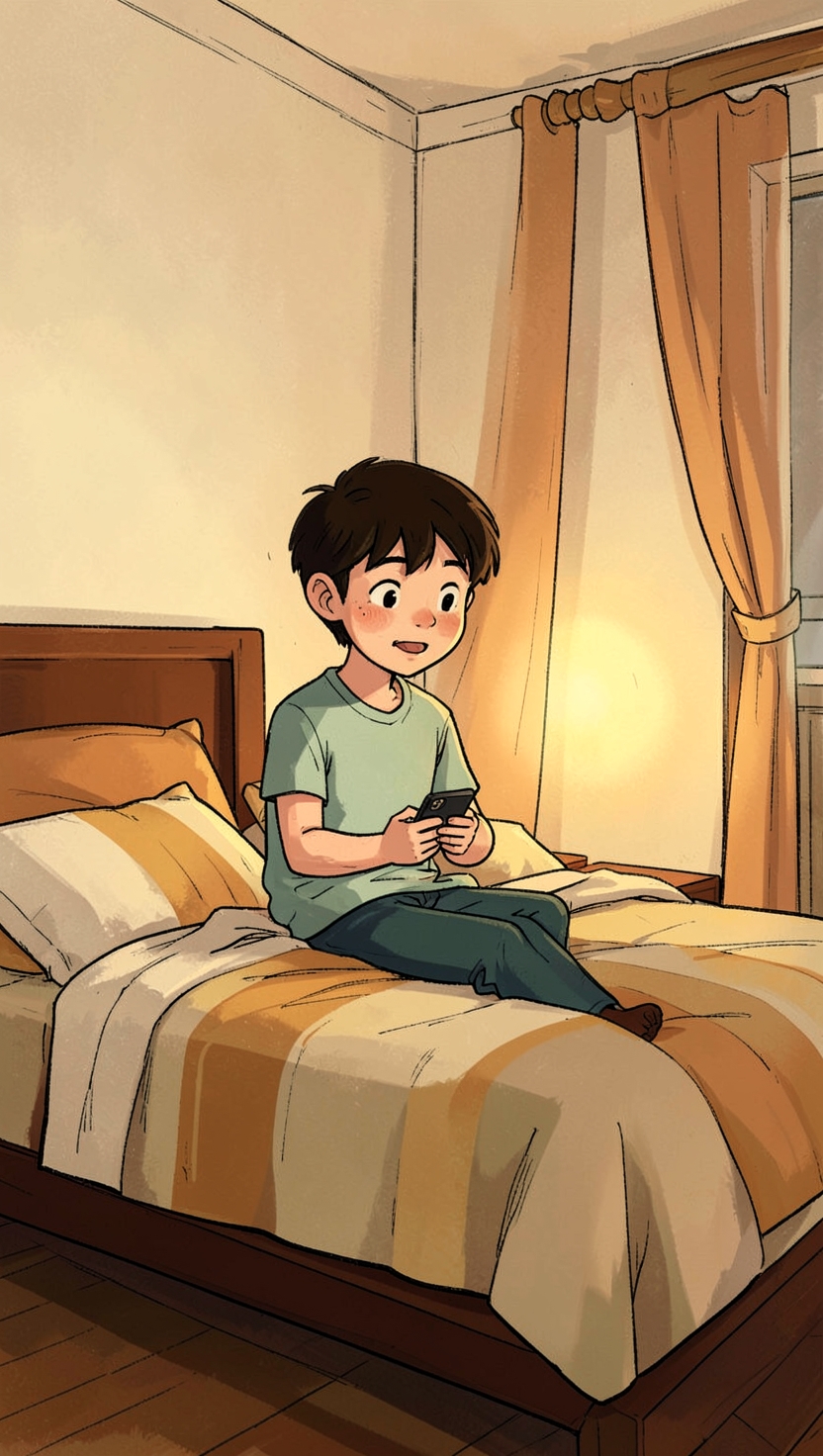
Japan’s Cabinet Office ran a consumer panel in February on people who use generative AI, reported by Kyodo in May. Among 1,442 users spanning teenagers to people in their seventies, 52.4 per cent of teenage girls said they consult AI about their worries, the highest share of any age and gender group in the survey. On whether they trust AI advice about personal relationships, 63.1 per cent of teenage girls said they greatly or somewhat do, against 38.6 per cent of respondents overall. About 10 per cent of all respondents said it helps reduce feelings of loneliness.
A separate survey of 1,200 secondary students in January, run by the school uniform maker Kanko Gakuseifuku and reported by Nippon.com, found nearly half of the girls used AI for advice or conversation, against 23 per cent of the boys. That one is a company survey, so treat it as a pointer rather than proof. It points the same way.
Be honest about what this evidence is. All of it is self-reported, and the Japanese panel surveyed people who already use AI rather than all teenagers, with only about a hundred people in each age and gender band. It is a consistent pattern across two countries, not a precise measurement of either.
The rules are aimed at the other app
Australia has moved faster here than anyone else in the region. Its second phase of online safety codes, registered through 2025 and fully in force from 9 March 2026, covers AI companion chatbots and companion features inside other services, and requires genuine age assurance: a self-declared birthday is explicitly not enough.
eSafety had already sent transparency notices in October 2025 to four companion services: Character.AI, Nomi, Chai and Chub AI. The findings, reported in March, were bleak. None had meaningful age checks, most did not automatically refer a user talking about self-harm or suicide to support, and two reported no dedicated trust and safety staff at all. One withdrew from Australia rather than comply.
That work needed doing. It also does not touch the 13-year-old asking a general assistant about a rash, or about her friend.
China drew its line in the same place, banning virtual companions for minors while teaching AI in every school. Companion and assistant is a legal distinction, and a reasonable one for a regulator to start with. Children do not use categories. They use whatever is already open.

The read from Singapore
We have no local equivalent of the Australian number for what children use AI for. We do know when they start. The SG-LEADS study of 2,985 children aged 8 to 13, presented at NUS in May, found that more than half of eight-year-olds had used AI tools, more than 70 per cent by age 10, and more than 90 per cent by 13. The most used tool was ChatGPT, followed by Meta AI and Google Gemini. The same general assistants, in the hands of children younger than this research usually covers.
Dr Xuejiao Chen of A*STAR, who led the work with NUS professor Jean Yeung, put it plainly: “At this stage, it is still important to have improved AI literacy among primary school students, their parents, and educators, especially since AI is still relatively new.”
What actually works at home
Auditing which apps are installed will not find any of this. The conversation is happening inside the tool you already approved for homework.
Two things are more useful. The first is to treat health and friendship questions as the tell rather than the crisis. A third of Australian children asked an assistant about their physical health. That is what a child asks when they are embarrassed, or when the worry feels too small to bother an adult with. If your child has never brought you one of those questions, it does not mean they have none.
The second is knowing what the machine is doing when it answers. Tama Leaver, professor of internet studies at Curtin University, wrote this week that these tools “do not understand if their responses are factual or not, only if they sound plausible”, and that they are highly sycophantic, tending to reinforce whatever the user already thinks. A system that agrees with an anxious 13-year-old at 11pm is not neutral. It is confident, warm and possibly wrong, and it will never say the awkward thing a parent would.
eSafety Commissioner Julie Inman Grant put it directly: “AI is not a trusted adult and cannot replace those key human interactions when children need advice, support or help with their wellbeing.” (We covered what happens when a child keeps that habit secret last month.)
We build AI mentors for children, so we have a commercial interest here, and we will still say the unhelpful-for-us part: none of it substitutes for the boring conversation.
So have it this week. Tell your child you would rather be asked a stupid question than not asked at all, and then be easy to ask. The competition is not some sinister companion app. It is a tool that never sighs, never looks tired, and is already open on the homework tab.
Was this useful?
Sources
- Homework Woes: Kids Turn to AI for Help · Mirage News (eSafety Commissioner media release)
- More than half of children and teens are using AI for personal reasons. This comes with risks · The Conversation
- Half of Japan teenage girls turn to AI for advice · Inquirer / Kyodo News
- Survey Finds Many Japanese Teens Using Generative AI · Nippon.com
- Companion chatbots not doing enough to protect kids: eSafety report · Biometric Update
- Australia: Phase 2 Online Safety Codes registered by eSafety Commissioner · Baker McKenzie
- Study finds that over half of eight-year-olds in Singapore have used AI; the most popular tool is ChatGPT · The Star (Asia News Network)